



A senior official from the United Arab Emirates is emerging as a contender to be the next secretary-general of the UN, electrifying the succession battle as it becomes mired in geopolitical infighting.
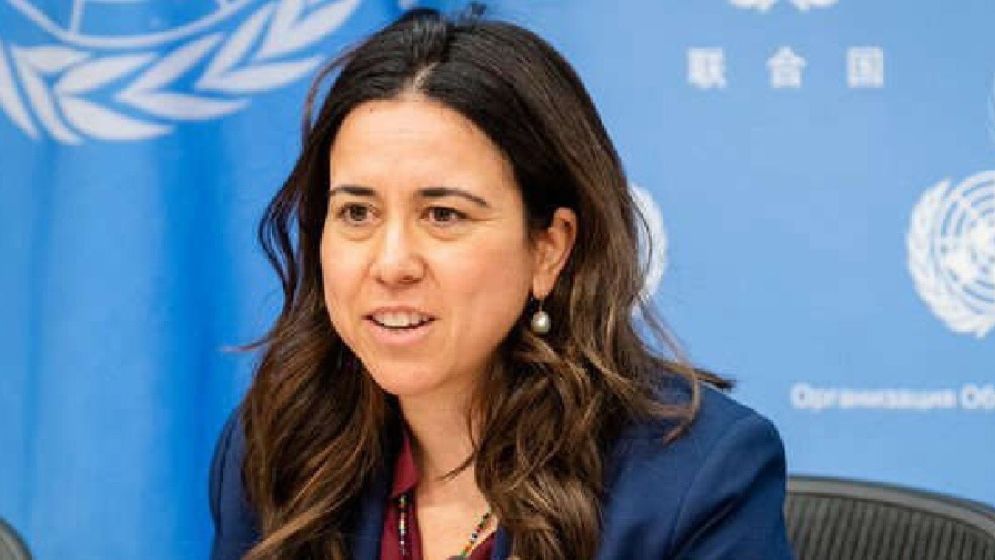
Supporters of Lana Nusseibeh have been sounding out missions at the UN, where she is well known as a former Emirati ambassador to the world body, to test the waters for her candidacy, diplomats say. UN insiders anticipate Nusseibeh, a minister of state at the UAE’s foreign ministry, could enter the race as early as this week.
The incumbent António Guterres is due to step down at the end of 2026, after two five-year terms overshadowed first by Covid and then by war. His successor will inherit an organisation in turmoil. The UN faces an acute budgetary crisis at a time when its authority on the world stage is at a historically low ebb and as the US, traditionally its biggest donor, is pushing for radical cuts.
After six months of public hustings at the UN and around the world, the three leading official candidates are still battling to win over all five of the permanent members of the UN Security Council (P5), each of whom can wield a veto on the choice of a successor.
The frontrunner Rebeca Grynspan, a former vice-president of Costa Rica and the head of the UN body on trade and development, last week won nine “encourage” votes in the latest Security Council straw poll. That would be enough in the final vote to secure the post, but she also had two “disapprovals” from veto-wielders.
The second-ranked candidate Rafael Grossi, the head of the International Atomic Energy Agency, also had two “disapprovals”.
The near deadlock is encouraging a fresh crop of candidates to consider throwing their hat into the ring at this late stage, according to people familiar with the state of the contest. The most high-profile — yet also, diplomats say, probably the most controversial — of the putative contenders is Nusseibeh.
She was a popular figure at the world body as the UAE’s UN ambassador from 2013 to 2024. For over a decade, the polished diplomat has articulated the UAE’s policies and defended its record at a time when it has been playing an increasingly assertive role in world affairs as both an investor and geopolitical actor.
The UAE has a close relationship with the Trump administration, but Nusseibeh could face a stiff challenge in distancing herself from the controversies over the UAE’s interventions in its region and beyond.
The UAE has faced intense criticism in particular over its role in Sudan, where it has backed the paramilitary Rapid Support Forces rebel group, which is accused of widespread atrocities in the country’s civil war. Abu Dhabi denies arming any of the warring factions.
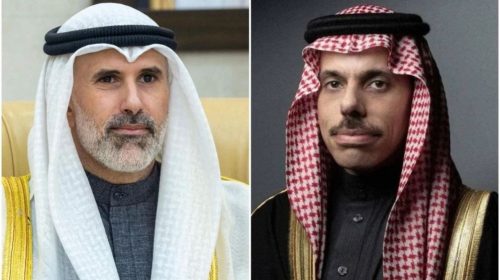
A particular question hanging over her candidacy would be whether Saudi Arabia, the dominant Gulf power, would oppose it. Some regional analysts think it unlikely Riyadh would object to her candidacy, as the kingdom — under fire by Iran-backed Houthi rebels — attempts to mend a rift with Abu Dhabi over their disagreements in Yemen.
But Giorgio Cafiero, chief executive and founder of geopolitical risk consultancy Gulf State Analytics, said the prospect of an Emirati secretary-general “could raise concerns in Riyadh”.
The Gulf powerhouses “have a very competitive relationship, with divergent agendas across the broader region”, Cafiero said. “This is not to say that Saudi Arabia would necessarily actively oppose such a candidacy,” he added, but “the rivalry between the two countries tends to play out in a zero-sum manner.”
There was an informal understanding in the UN General Assembly this year that it was Latin America’s time to hold the post, and that a woman should take charge after nine male secretaries-general. But the US, which traditionally has the most influence on the decision, has started to play down in public the role of region and gender in the selection.
“We understand there is a desire for regional rotation,” Mike Waltz, the US ambassador to the UN, said after last week’s vote. “Of course if the best candidate’s a woman we would welcome that but we really just need the best candidate.”
“The Latin Americans are going to fight tooth and claw to have one of their own as secretary-general,” said Richard Gowan, a UN expert at the International Crisis Group. “But the veto powers may not care.”
Among other names circulating, UN diplomats say, is a former Turkish foreign minister, Feridun Sinirlioğlu, the head of the Organisation for Security and Co-operation in Europe. There are also at least two more Latin American officials taking soundings.
Grynspan’s supporters stress she has won five out of the six votes so far, and is the only contender with a record of reform at the UN. Close observers of the UN say her two “disapprovals” are not insuperable and may reflect attempts by P5 countries to elicit concessions from her over appointments to jobs and her priorities. Such bargaining is a regular feature of UN succession races.
In 1996 Kofi Annan faced a P5 “disapproval” until the closing stages of the race, before he was ultimately appointed in part because the US saw him as an unflamboyant figure who would not rock the boat.
David Steven, a senior fellow at the UN Foundation, said the current “field” of candidates was “not yet dead” but that there was mounting expectation of new candidates joining the fray.
Among the scenarios, he said, was that if a new entrant failed to win support, a “UN safe pair of hands” could yet win the prize, not least given that the US insists on a candidate with a serious reform agenda.
“The Security Council should get on with it,” he said. “It is ridiculous that the 15 members should take this long. The candidate will end up with less time for the transition than the Security Council had to make its choice.”