



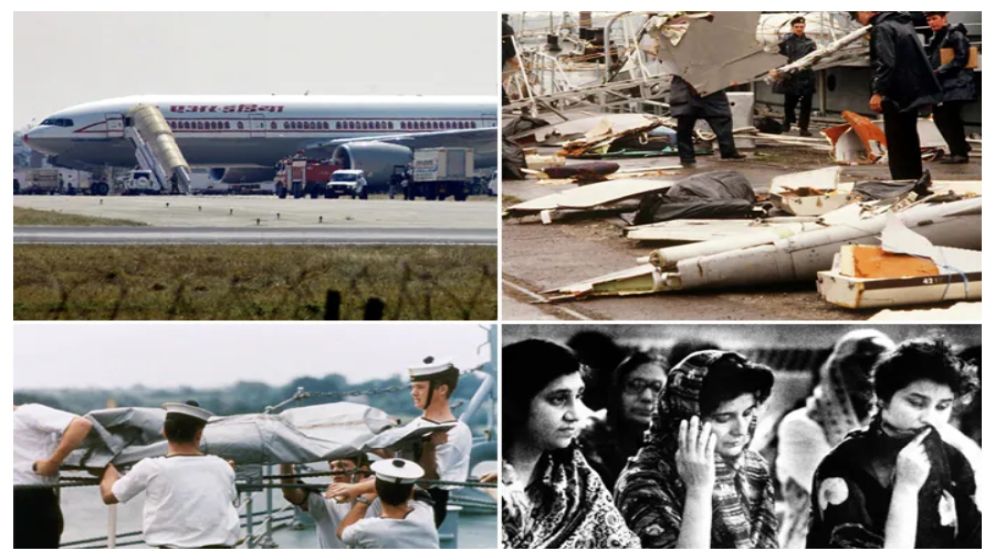

Families seeking justice for the 329 victims of the 1985 Air India Flight 182 Kanishka bombing have expressed outrage over reports that the Royal Canadian Mounted Police (RCMP) plan to scale back its multi-decade investigation and declare the case “inactive”.
The victims’ families were briefed during a recent high-level meeting organised by the RCMP leadership. The decision affects the investigation into the worst terrorist attack in Canadian history, which claimed 329 lives, including 268 Canadian citizens, when a bomb exploded over the Atlantic Ocean off the coast of Ireland on 23 June 1985.
Relatives Reject Case Inactivation Plan
Sanjay Lazar, chairman of the Kanishka Foundation, lost his father, mother, and infant sister in the tragedy. He has written an urgent letter to Canadian Prime Minister Mark Carney, strongly opposing any move to wind down the task force. The letter was also copied to Indian Prime Minister Narendra Modi.
Lazar described the Toronto meeting as the first official family briefing in 20 years. He expressed shock at suggestions that the burden of generating fresh leads should now fall on the bereaved families.
“If the current team cannot make progress, authorities must find another way rather than surrender,” Lazar stated, calling for a renewed public appeal and an increase to the $1-million reward offered for information regarding the perpetrators.
Security Failures and Legal Outrage
The Air India disaster exposed severe structural flaws within Canada’s intelligence and security apparatus. A subsequent public inquiry headed by former Supreme Court Justice John Major highlighted significant failures in threat management and information-sharing between law-enforcement agencies.
The legal journey remains a source of deep frustration for the victims’ relatives:
Inderjit Singh Reyat remains the sole individual convicted in connection with the synchronized bombings at Narita Airport and aboard Flight 182.
Two other key suspects were acquitted in 2005 due to missing evidence, erased surveillance tapes, and the loss of critical witnesses over time.
Political and Diplomatic Fallout
The potential closure of the investigation reopens international wounds. Former Prime Minister Stephen Harper previously assured families that Canadian authorities would pursue the case to its logical conclusion.
As the 41st anniversary of the tragedy approaches, relatives maintain that administrative convenience should not replace criminal accountability. The Kanishka Foundation continues to demand a complete reinvestigation by independent specialists to ensure all remaining investigative avenues are fully exhausted.
Source: NDTV