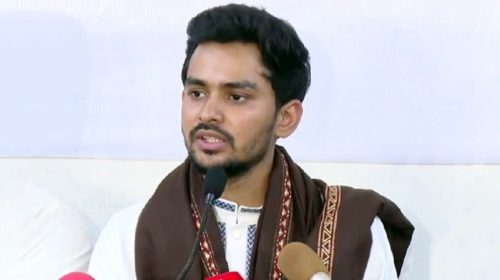


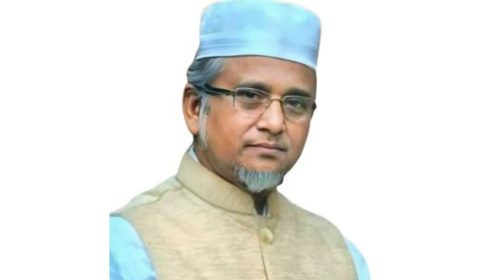







Bangladesh Jamaat-e-Islami Ameer Dr Shafiqur Rahman’s description of the United States as a “tested friend” of Bangladesh during the celebration of the 250th anniversary of American independence at the South Plaza of the Jatiya Sangsad has reignited an old debate. Diplomatic niceties are an integral part of international relations, and there is nothing unusual about celebrating the ties between two countries. Yet portraying the United States as a “tested friend” without acknowledging the defining test of 1971 risks reducing history to political convenience.
The irony is difficult to ignore. The remark comes from the leader of a party whose own role during Bangladesh’s Liberation War continues to cast a long shadow over its political legacy. For Jamaat-e-Islami to invoke the language of enduring friendship while remaining silent about both its own wartime position and Washington’s record during the Liberation War raises uncomfortable questions about historical consistency.
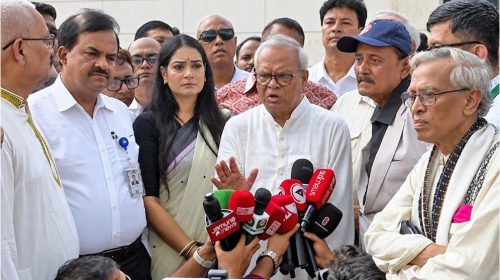
The celebration itself drew criticism from left-wing political parties and several public intellectuals, who argued that hosting such an event at the country’s highest legislative institution overlooked a painful chapter in Bangladesh’s history. They also linked the event to broader concerns about growing American influence, echoing their recent criticism of the Interim Government’s reciprocal trade agreement with the United States as being contrary to Bangladesh’s sovereign interests. Whether one agrees with these objections or not, they reflect a historical memory that remains deeply embedded in the national consciousness.
Many historians regard the Nixon administration’s policy during the Bangladesh Liberation War as one of the gravest moral failures of American foreign policy. Guided by Cold War calculations and the strategic opening to China, President Richard Nixon and his National Security Adviser Henry Kissinger continued political and military support for Pakistan despite mounting evidence of widespread atrocities committed by the Pakistani military in East Pakistan.
What makes that policy particularly striking is that it was fiercely contested within the American government itself. Archer Blood, the US Consul General in Dhaka, led one of the most remarkable acts of diplomatic dissent in American history. The now-famous Blood Telegram, signed by nearly twenty officials, condemned what they described as Washington’s “moral bankruptcy” in failing to denounce the Pakistani military’s actions. Rather than being commended, Blood was effectively sidelined.
Gary J Bass’s acclaimed book, The Blood Telegram: Nixon, Kissinger, and a Forgotten Genocide, reconstructs this period through diplomatic cables and firsthand accounts. It shows how American diplomats on the ground documented what they described as genocide, detailing systematic atrocities against Bengali civilians, intellectuals, students and the Hindu community, while policymakers in Washington chose strategic silence over moral leadership.
The contradictions in American policy became even more visible in December 1971. As the Indo-Pakistani War entered its decisive phase, the United States dispatched Task Force 74, led by the nuclear-powered aircraft carrier USS Enterprise, into the Bay of Bengal. Although historians generally view the deployment as a Cold War signal aimed at the Soviet Union and India, in Bangladesh it was widely perceived as an attempt to intimidate those fighting for the country’s liberation. That perception has remained part of Bangladesh’s historical memory ever since.
Yet the story of America in 1971 cannot be reduced to the actions of the Nixon administration alone.
While the White House stood by Pakistan’s military rulers, many Americans stood firmly with the Bengali people. Archer Blood and his colleagues chose conscience over career. American writers, artists and activists challenged their own government’s policy. Allen Ginsberg captured the suffering of Bengali refugees in poetry. Joan Baez lent her voice to international protests. George Harrison and Ravi Shankar organised the Concert for Bangladesh, bringing unprecedented global attention to one of the twentieth century’s worst humanitarian crises and raising substantial funds for refugee relief.
The United States itself also changed course after Bangladesh’s victory. Following independence, Washington moved quickly to establish relations with the new state and became one of Bangladesh’s principal development partners. Within months it had committed substantial humanitarian assistance, and by 1973 it had emerged as the country’s largest bilateral aid donor, supporting reconstruction in a war-ravaged nation.
This distinction between the Nixon administration and the American people is important. Bangladesh can value its contemporary partnership with the United States while honestly acknowledging the profound failures of American policy in 1971. Equally, it should remember with gratitude those diplomats, intellectuals, artists and ordinary citizens in the United States who stood with Bangladesh when their own government did not.
That is precisely why the description of the United States as a “tested friend” demands careful reflection. Friendship is tested in moments of crisis. During Bangladesh’s greatest national trial, the Nixon administration failed that test. Many Americans, however, passed it with remarkable courage and humanity.
History is not served by selective remembrance. Bangladesh’s Liberation War is the moral foundation of the Republic. Any political party—particularly one whose own wartime role remains deeply contested—should approach that history with humility rather than revisionism. Celebrating today’s partnership between Bangladesh and the United States is entirely legitimate. Recasting the historical record is not.
Strong bilateral relations are built not on forgetting difficult truths but on confronting them honestly. Bangladesh and the United States today enjoy a mature and constructive partnership. That partnership is strengthened, not weakened, when both countries recognise that while official Washington once stood on the wrong side of history, many Americans helped keep the world’s conscience alive.