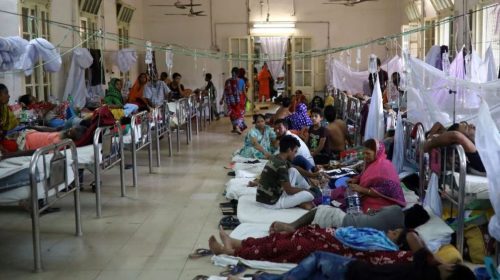












More than half of intensive care unit (ICU) patients who were initially free of difficult-to-treat drug-resistant bacteria acquired them during their hospital stay, highlighting an urgent need to strengthen infection prevention and control measures in Bangladesh’s healthcare facilities, according to two new studies by icddr,b.
The findings, announced on Saturday, were published in the journals Microbiology Spectrum and Antimicrobial Resistance and Infection Control.
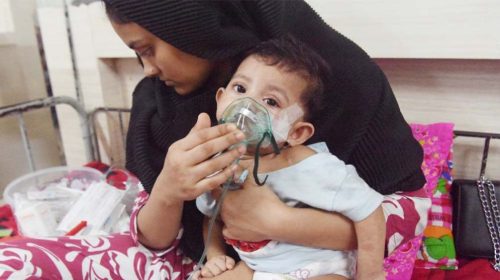
The studies analysed data from 373 critically ill adult patients admitted to an ICU between July 2023 and February 2024 and 363 newborns treated in a neonatal intensive care unit (NICU) between December 2023 and September 2024 at a tertiary government hospital in Dhaka.
Researchers found that nearly half (48.5%) of ICU patients were already colonised with difficult-to-treat drug-resistant Gram-negative bacteria in their gut. Among the 198 patients who were initially free from the bacteria, 105, or 53%, acquired them during their ICU stay, indicating significant in-hospital transmission.
The study focused on four major Gram-negative bacteria commonly associated with hospital-acquired infections — Escherichia coli, Klebsiella pneumoniae, Acinetobacter baumannii and Pseudomonas aeruginosa. These bacteria are resistant to commonly used antibiotics and can cause severe illnesses, including pneumonia, bloodstream, urinary tract and wound infections.
The researchers found that mortality among patients who developed culture-confirmed infections with these bacteria exceeded 90% in the ICU.
Using whole-genome sequencing, they also found evidence that, in some patients, the same bacterial strain that had colonised the body later caused life-threatening infections.
Dr Gazi Md Salahuddin Mamun, Assistant Scientist at icddr,b and lead author of one of the studies, said the research tracked patients throughout their ICU stay and used advanced laboratory techniques to understand how resistant bacteria spread within hospitals.
“This allowed us to identify links between bacteria carried by patients and those causing subsequent deadly infections,” he said.
Dr Fahmida Chowdhury, Lead of the Antimicrobial Resistance (AMR) Research Unit at icddr,b and principal investigator of the studies, said hospitals should be places of healing rather than sources of potentially life-threatening infections.
“In our study, more than half of the patients who were initially free from these difficult-to-treat resistant bacteria acquired them during their ICU stay, which is deeply concerning. Strengthening infection prevention and control practices, hospital hygiene, and responsible antibiotic use is essential to better protect critically ill patients,” she said.
The second study demonstrated that improved infection prevention measures could significantly reduce infections and deaths in hospitals.
Conducted in a neonatal intensive care unit, the study introduced regular training for healthcare workers and cleaning staff on hand hygiene, environmental cleaning, waste management and infection prevention practices.
After seven months of intervention, bloodstream infections fell from 28 to four cases per 100 admissions—an 86% reduction—while mortality dropped from 26 to four deaths per 100 admissions.
Dr Tahmeed Ahmed, Executive Director of icddr,b, said the findings underscored both the scale of the problem and the effectiveness of basic infection prevention measures.
“These studies reveal a troubling reality: patients are acquiring difficult-to-treat drug-resistant bacteria while receiving care in our hospitals, and the consequences can be devastating. At the same time, they show that strengthening basic infection prevention and control measures can dramatically reduce infections and deaths,” he said.
He urged hospital authorities and policymakers to prioritise infection prevention, hospital hygiene, surveillance and responsible antibiotic use to protect patients and combat antimicrobial resistance.