
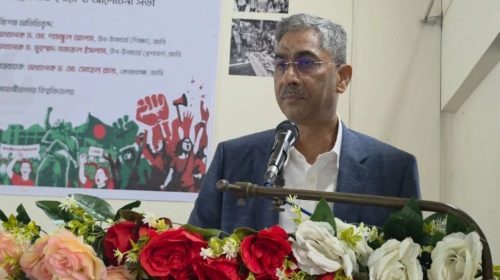








The government is relying on long-term policy continuity to rebuild investor confidence and attract higher levels of foreign direct investment (FDI), Executive Chairman of the Bangladesh Investment Development Authority (BIDA) Chowdhury Ashik Mahmud Bin Harun said on Thursday.
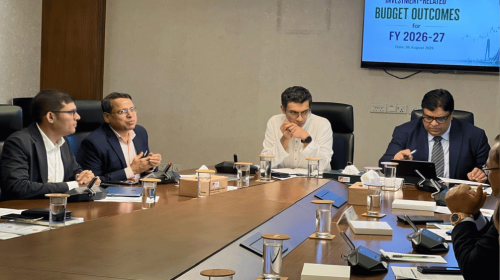
Speaking at a briefing on the “Investment-Related Budget Outcomes for FY2026-27” at BIDA’s conference room in Agargaon, Ashik said the government’s latest budget was designed to send a strong message to both local and foreign investors that Bangladesh is committed to maintaining consistent and predictable economic policies.
Responding to a question from the Daily Sun, he acknowledged that global investment flows remain subdued because of geopolitical and economic uncertainties, but stressed that Bangladesh’s biggest challenge has long been the perception of weak policy and political continuity.
“The most common concern we hear from foreign investors is the lack of policy continuity and political stability. Through this budget, we want to send a clear signal that the government is serious about ensuring long-term policy consistency,” he said.
Ashik noted that investors should not expect billions of dollars in new investment immediately after the announcement of policy reforms.
“This is a long-term exercise. We have to send the same message repeatedly. Once investors see that Bangladesh consistently delivers on its commitments, their confidence will grow and they will become more willing to invest,” he said.
He described the government’s decision to provide a five-year tax policy outlook as an unprecedented step for Bangladesh, saying such long-term certainty had rarely been offered before.
“Six months ago, no investor expected the government to announce a five-year tax policy framework. We are starting with five years as a test case. It is a major improvement in terms of policy continuity and can be extended in the future as we gain experience,” he added.
Ashik said the FY2026-27 budget had been prepared with investment, production and job creation at its core, while deregulation had been established as one of the government’s principal policy priorities to improve the business climate.
He said the budget provides clear policy direction by promoting technology-driven and predictable taxation, export diversification, local value-chain development, renewable energy and innovation as key drivers of economic growth.
Highlighting the deregulation agenda, Ashik said the government has introduced measures to allow businesses to start operations within 14 days through a single-window service, with automatic approval if authorities fail to meet prescribed service deadlines.
He said the validity of bonded warehouse licences has been extended from one year to three years, while bonded facilities have been expanded to cover production units located within a 60-kilometre radius of the main factory.
To encourage export diversification, the government has also allowed manufacturers in 10 new export-oriented sectors, including motorcycles, speedboats and handicrafts, to import duty-free raw materials through bank guarantees without requiring bonded warehouse licences.
Ashik said another major reform was the removal of the mandatory 30% domestic value-addition requirement for products manufactured using duty-free imported raw materials, a move expected to improve manufacturers’ competitiveness.
He also highlighted measures aimed at improving the investment climate by allowing foreign investors to repatriate dividends within 30 days, reducing fund transfer times from Non-Resident Taka Accounts (NITA) to one working day, and substantially increasing the threshold for overseas remittances without prior Bangladesh Bank approval.
The BIDA chief further said the budget reduced the financial burden on businesses seeking to challenge VAT assessments by lowering the mandatory pre-deposit for appeals from 10% to 1% at the appellate level and 2% at the High Court.
Ashik said the government had also introduced long-term tax certainty by locking in incentives for key industries over periods ranging from five to 10 years.
Under the new framework, tax incentives for consumer electronics, computers, shipbuilding and batteries will remain unchanged until 2030, while incentives for semiconductors, electric vehicle manufacturing and most solar equipment will continue until 2031. Registered startups and solar power generation projects will enjoy tax benefits until 2035.
He said special incentives had also been introduced for priority sectors, including ICT, renewable energy, electric vehicles, pharmaceuticals and export-oriented manufacturing.
These include a Tk5 billion startup fund, zero turnover tax for startup sandbox companies, tax exemptions for freelancers and content creators, reduced import taxes on electric vehicles, zero customs duty on solar equipment and key pharmaceutical ingredients, and a reduction in advance income tax on cotton imports for the textile sector.
The BIDA chief also reiterated the government’s ambition to transform Bangladesh into a regional manufacturing hub and a global production base by improving logistics, supply chains and time-to-market.
“We have introduced measures to enable factories to begin operations within 14 days, accelerate customs clearance through the Authorised Economic Operator (AEO) system and attract greater foreign investment into the logistics sector,” he said.
Referring to the country’s energy shortages, Ashik admitted that gas and electricity constraints remained one of the biggest challenges facing investors.
“There is no overnight solution to the energy crisis. The government is fully aware of the problem and is working at the highest level to resolve it as quickly as possible,” he said, adding that both the Prime Minister and the energy authorities were closely monitoring the situation.
He said the government was also considering temporary support measures for businesses affected by gas shortages, including possible relief on government service charges for investors operating in economic zones while they continue to repay bank loans despite supply disruptions.
Ashik also acknowledged that implementing policy decisions at the field level remained a challenge.
He said many entrepreneurs outside Dhaka were still unaware of financing facilities announced by Bangladesh Bank, while some investors continued to face delays in implementing revised customs policies despite digital systems.
“We must ensure that policy decisions are translated into action more quickly. Implementation is just as important as policy formulation,” he said.
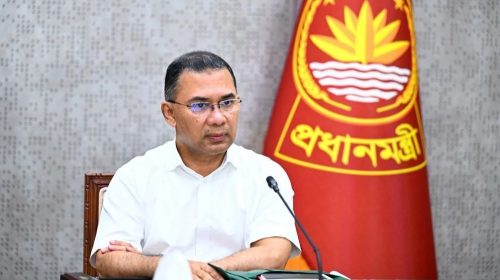
The briefing was attended by Rehan Asif Azad, adviser to the prime minister, as chief guest, and Tanvir Shahriyar Ghani, special assistant to the prime minister on investment and capital market affairs, as special guest.
Rehan Asif Azad said the government was introducing digital monitoring systems to improve transparency and accountability across ministries, adding that every ministry was tracking the implementation of its 180-day action plan.
He also said attracting foreign investment would require sustained efforts to showcase Bangladesh’s strengths globally, particularly in emerging sectors such as semiconductors.
Tanvir Shahriyar Ghani said the budget sought to reduce businesses’ excessive dependence on bank financing by encouraging greater use of the capital market. He said reforms were under way to shorten the time required to issue corporate bonds and equities while creating an environment that would encourage more companies to raise long-term financing from the capital market rather than relying solely on banks.