






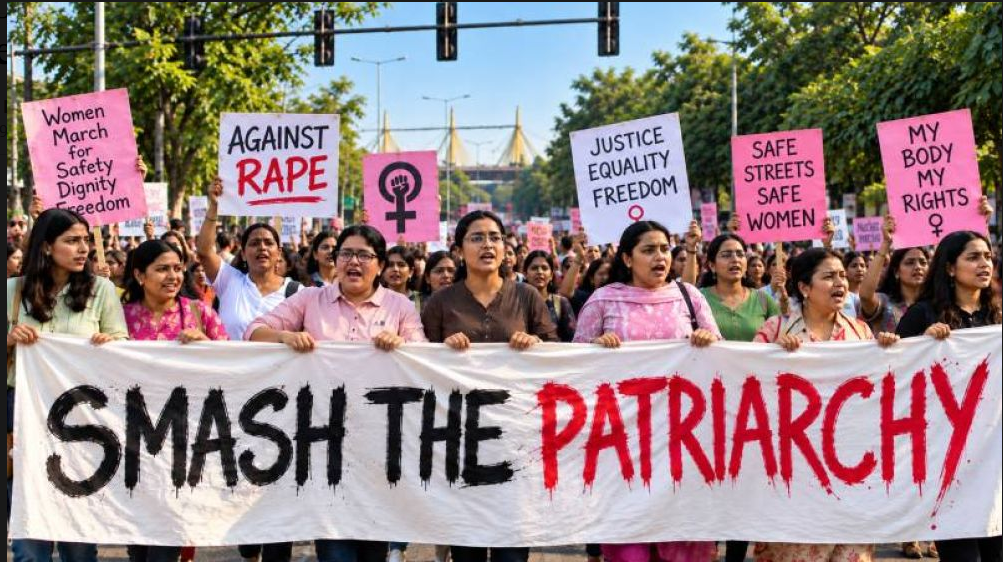

For many women in Pakistan, the first barrier to justice may appear long before a case reaches a courtroom. It can begin with the police officer who doubts a complaint, the investigator who overlooks evidence, the official who treats domestic violence as a family matter, or the language used to describe a woman seeking protection.
The Supreme Court has now placed that problem squarely within the justice system itself.
In a judgment issued on 14 September, the Supreme Court held that protecting women from violence requires not only a change in social attitudes but also investigations and adjudication conducted through a gender-sensitive lens.
Justice Muhammad Hashim Khan Kakar, writing for a two-member bench, said police officers must be trained to recognise and overcome gender and patriarchal biases when dealing with violence against women.
The judgment came in a domestic homicide case, but its significance reaches beyond one murder.
It confronts a longstanding problem in which violence occurring inside homes is often treated differently from violence in public spaces, even though the private setting can make evidence harder to obtain and victims more vulnerable.
The Supreme Court’s reasoning exposes an uncomfortable reality: when prejudice enters the investigation, it can distort the search for truth before a judge ever sees the evidence.
When the home becomes a shield
Domestic violence presents a particular challenge to criminal justice because the crime often occurs behind closed doors.
In its latest judgment, the Supreme Court observed that in domestic homicide, the tragedy is not only that a woman can be killed inside her home but that the circumstances surrounding her death can also become concealed behind those same walls.
The court stressed that it is the responsibility of the legal system to uncover the truth rather than allow the privacy of the matrimonial home to become a shield for perpetrators.
That distinction matters because conventional assumptions about witnesses and evidence can work against women in domestic cases.
There may be no independent eyewitness. Family members may be reluctant to testify. Physical evidence can disappear quickly. A victim is unable to speak for herself when the alleged violence results in death.
The investigator must reconstruct events from the available evidence rather than rely on assumptions about what happens inside a marriage.
The Supreme Court specifically directed attention towards identifying, preserving and placing every available piece of evidence on record.
The judgment consequently places the investigative process itself under scrutiny.
Violence remains widespread
The institutional concerns come against a background of continuing violence against women.
UN Women’s current Pakistan country data records that 24.5% of ever-married women aged 15 to 49 experienced physical and/or sexual intimate-partner violence at least once in their lifetime, based on Pakistan’s 2017–18 Demographic and Health Survey.
The corresponding proportion reporting such violence during the previous 12 months was 14.5%. These are the latest nationally comparable figures available through the UN Women database, rather than new 2026 survey estimates.
More recent reporting also points to continuing violence.
The Human Rights Commission of Pakistan’s reporting for 2025 recorded 470 women killed in so-called honour-related incidents.
A report based on HRCP data said gender-based violence incidents increased during the year, while thousands of cases involving cyber harassment and other forms of violence were also recorded.
Parliament’s Special Committee on Gender Mainstreaming in September 2026 expressed concern over what it described as increasing violence against women and girls.
The committee called attention to investigations, prosecutions, preservation of evidence and alleged negligence or delays by officials.
These figures do not capture the entire scale of violence.
UN Women notes that Pakistan’s police departments collect administrative data on rape, domestic violence, harassment, honour killings and other crimes, but the information is not publicly available in a standardised national format, making comparisons between provinces difficult.
That weakness in data itself complicates the task of measuring the justice gap.
Laws exist, but bias survives
Pakistan has a substantial body of legislation addressing violence against women.
At the federal level, the Domestic Violence (Prevention and Protection) Act 2012 provides legal remedies, while provinces have enacted their own domestic violence laws.
Sindh, Punjab, Khyber Pakhtunkhwa and Balochistan each have separate legislative frameworks dealing with domestic violence.
The country also has specialised mechanisms for gender-based violence cases.
UN Women currently records 480 designated GBV courts, including 116 at district level. During 2023, 48,395 new cases were instituted in these courts, and 30,631 were resolved.
The existence of laws and specialised courts, however, does not remove the influence of social attitudes from the justice process.
A complaint can be registered under a law and still be investigated through assumptions about a woman’s character, marriage, clothing, behaviour or relationship with the accused.
A case can reach court while the underlying evidence has already been compromised by poor investigation.
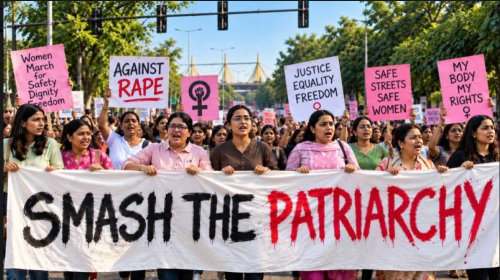
The Supreme Court’s latest ruling is significant precisely because it identifies patriarchal bias not merely as a social problem but as something that can directly affect criminal investigation and adjudication.
A judiciary still dominated by men
The gender composition of the justice system adds another dimension.
The Law and Justice Commission of Pakistan’s report on women in the justice sector found that women represented 18% of the country’s 3,142 judges and judicial officers.
At the upper tier — comprising the Supreme Court, Federal Shariat Court and five high courts — only seven of 126 judges were women, or 5.5%. At the district level, 565 of 3,016 judicial officers were women, representing 19%.
Those figures do not establish that male judges are inherently less capable of dealing with women’s cases, nor do they mean that female judges will automatically produce different outcomes.
They do, however, demonstrate a pronounced gender imbalance in the institutions that interpret laws, evaluate evidence and determine criminal responsibility.
Justice Ayesha Malik, Pakistan’s first female Supreme Court judge, noted in 2025 that women constituted around 25–26% of lawyers but only about 2% of judges, while describing the legal environment as heavily male-centric.
The disparity becomes particularly relevant when combined with the Supreme Court’s latest emphasis on recognising patriarchal bias.
The first point of contact
The justice system does not begin in the courtroom.
For many survivors, it begins at a police station, hospital, medico-legal facility or prosecutor’s office.
The first response can determine whether evidence is preserved, whether a complaint proceeds and whether a survivor remains engaged with the legal process.
UN Women’s current Pakistan data records 21 specialised police stations or units dealing with violence against women and girls, alongside more than 40,000 law-enforcement professionals trained under various programmes between 2021 and 2022.
The data also records Anti-Rape Crisis Cells established under the Anti-Rape Act 2021 within district headquarters hospitals.
Yet the same UN Women database notes that police data is not publicly available in a standardised format across provinces.
That creates a contradiction. The state has mechanisms designed to respond to gender-based violence, but the broader system still lacks a sufficiently transparent and comparable picture of how those mechanisms perform.
Language is part of the problem
Gender blindness does not operate only through formal decisions.
It can also appear in the language used by politicians, officials, police, courts and the media.
Descriptions that place disproportionate scrutiny on a woman’s behaviour can shift attention away from the alleged conduct of the perpetrator.
In domestic violence cases, language about family honour, marital disputes or private disagreements can make serious violence appear to be a domestic conflict rather than a criminal offence.
The Supreme Court’s latest ruling cuts directly across that tendency by stating that the privacy of a matrimonial home cannot prevent investigators from pursuing evidence.
The principle is broader than domestic homicide. It establishes that the private nature of a relationship cannot, by itself, determine how seriously violence is investigated.
The justice system is already under examination
Pakistan’s judicial institutions have themselves placed gender-responsive justice on the reform agenda.
The National Judicial Policy Making Committee designated gender-responsive justice as a priority for 2026–27.
The Law and Justice Commission has listed women’s facilitation centres, legal aid and advisory services, mediation and family support, gender-fair language and legal awareness among the areas included in that agenda.
UN Women reported that in 2025 it strengthened the capacity of 37 government, parliamentary and justice institutions and supported capacity-building for 224 justice-sector actors.
Six Anti-Rape Crisis Cells established in 2024 provided medico-legal, psychosocial and legal support to 1,724 women and 27 boys during 2025.
These developments form part of the institutional landscape, but they do not erase the underlying disparities documented in justice-sector representation or the continuing reports of violence.
When patriarchy enters the evidence room
The central issue raised by the Supreme Court is ultimately about the quality of the justice process.
A gender-sensitive investigation does not mean lowering evidentiary standards or presuming guilt.
It means recognising circumstances in which gender and power can influence a crime, a victim’s ability to report it, the availability of witnesses and the preservation of evidence.
That distinction is especially important in domestic violence.
When a woman is harmed inside a home, the absence of an eyewitness cannot automatically become evidence that nothing happened. When a victim dies, the fact that she cannot testify cannot end the search for the circumstances surrounding her death.
The investigator must instead examine the evidence that remains.
Beyond the courtroom
Pakistan’s gender justice problem is not confined to the number of women sitting on judicial benches.
It extends from social attitudes to police stations, from investigation rooms to medico-legal facilities, from prosecution offices to courtrooms, and from official language to media narratives.
The Supreme Court’s September judgment has placed one part of that problem into unusually sharp focus: patriarchal assumptions can affect the way violence against women is investigated and adjudicated.
The country’s own data shows the scale of the broader challenge.
Women remain underrepresented in the judiciary, domestic and intimate-partner violence remains widespread according to the latest nationally comparable survey data, and police statistics remain fragmented and difficult to compare nationally.
Pakistan faces a justice question that cannot be answered merely by counting laws, courts or complaints.
It concerns what happens when a woman walks into the justice system and whether the institutions she encounters see her case through the evidence or through the assumptions attached to her gender.
Source: Daily Mirror