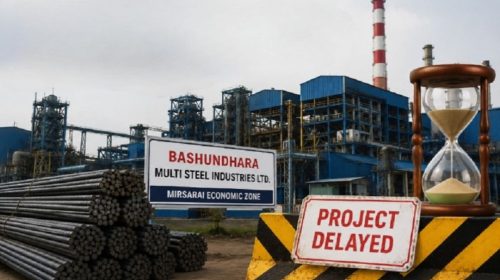



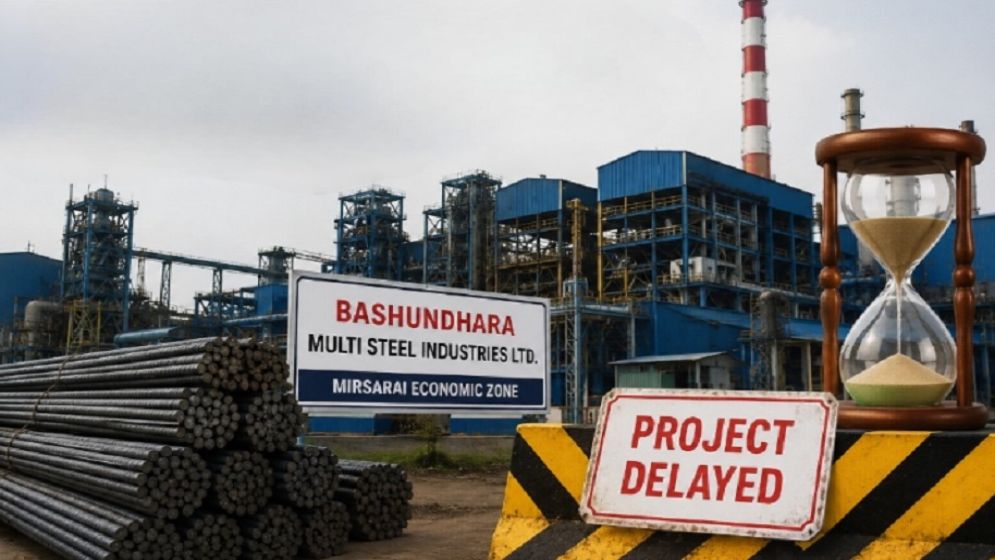

A Tk7,000-crore-plus mega steel project of Bashundhara Multi Steel Industries Ltd (BMSIL), designed to produce 1.25 million tonnes of steel annually, has suffered massive financial losses.
The project has also faced a three-year delay amid alleged policy and banking hurdles set by the interim government.
The greenfield steel plant, planned at the National Special Economic Zone in Mirsarai, Chattogram, was initially scheduled to be commissioned in 2024. However, the project has yet to begin production, with commissioning now expected by the end of 2027.
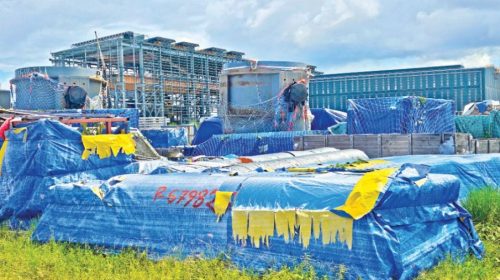
According to project sources, BMSIL imported machinery worth around Tk500 crore through letters of credit (LCs), with 275 containers arriving at the port. The machinery subsequently remained stranded for months, resulting in huge port, shipping and container detention charges.
The sources said the project’s accumulated losses have reached around Tk2,958 crore, including currency-related losses, port and container charges, bank interest and excise duties, and additional expenditure on utility infrastructure.
The project was initially estimated to cost Tk4,160 crore. However, the investment requirement has risen to around Tk7,118 crore, largely because of currency depreciation, financing costs and delays.
LC documents held up
Project-related sources alleged that the banking complications arose after all businesses bearing the Bashundhara name were treated as a single entity for lending and LC purposes.
They claimed that the policy created difficulties for BMSIL even though the companies were separate legal entities. The central bank subsequently clarified that the different Bashundhara companies were separate entities, according to the sources.
By then, however, the project had already suffered significant financial damage.
The machinery remained stuck in nearly 275 containers, while port and shipping-related charges accumulated. According to the project sources, the total cost of such damages eventually reached around Tk950 crore.
The sources said the problem continued for around 13 months, during which the project could not move forward despite the company arranging funds demanded by banks for settling the machinery-related obligations.
An official of BMSIL, speaking on condition of anonymity, said the LCs had been opened for capital machinery rather than raw materials.
“Such charges on a pre-revenue project are not consistent with conventional project financing practices,” the official said, adding that the additional costs accumulated during the delay were not caused by either currency movements or the company itself.
Project cost jumps to Tk7,118cr
The project was approved during the tenure of the previous Awami League government in 2022. Safwan Bashundhara Global, a subsidiary of which BMSIL is part, received permission to establish the mega steel plant on around 70 acres in the Mirsarai economic zone.
The plant was designed using advanced technology and is expected to produce rebar coils and wire rods, products that Bangladesh currently imports by spending substantial amounts of foreign currency.
Project officials said the plant is expected to save around Tk3,000 per tonne in steel production costs while creating direct employment for at least 7,000 people and indirect employment for nearly 100,000.
The facility has also been designed as a low-emission green steel plant, with the aim of producing high-quality steel at comparatively lower operating costs.
Shahed Jahid, chief operating officer of Safwan Bashundhara Global, said the company had invested in the project to introduce rebar coil and wire rod production in Bangladesh using advanced, low-emission technology.
He said the project’s estimated cost had increased from Tk4,160 crore to Tk7,118 crore, while its commissioning had been pushed back from the end of 2024 to the end of 2027.
“Every additional delay increases the project’s cost, weakens its financial capacity and puts pressure on both investors and lenders,” he said.
Financing for the project included a syndicated term loan led by Agrani Bank involving eight commercial banks.
The consortium included Sonali Bank, Janata Bank, Rupali Bank, Bangladesh Development Bank, Mutual Trust Bank, Bank Asia and SBAC Bank.
The banks approved a combined syndicated term loan of Tk2,350 crore, but only Tk576 crore, or 24.51%, was disbursed. A further Tk1,774 crore remains undisbursed, according to project sources.
As of 30 June 2026, interest and excise duty on the project had reached Tk858 crore. Of this, Tk246 crore was related to the disbursed portion of the syndicated loan, while Tk611 crore was associated with forced loans.
BMSIL has so far repaid Tk411 crore from sponsor equity and internal sources, the sources said.
Utility infrastructure adds to financial burden
The project also faced difficulties in securing gas, electricity and water connections inside the economic zone.
Although the relevant authorities were responsible for providing utility infrastructure, BMSIL paid around Tk290 crore upfront for 50-year utility services and later invested another Tk300 crore from its own funds to accelerate the construction of the required infrastructure.
Of the additional Tk300 crore, around Tk250 crore was spent on electricity transmission lines, Tk40 crore on gas connections and Tk10 crore on water supply infrastructure.
Karnaphuli Gas Distribution Company approved a supply of three million standard cubic feet of gas per day, while the Bangladesh Economic Zones Authority and Bangladesh Rural Electrification Board approved water and electricity connections. However, the physical infrastructure needed to deliver those services was built with BMSIL’s own funds.
Tk2,958cr loss before production begins
BMSIL says three major financial pressures have accumulated even though commercial production has yet to begin.
These include around Tk850 crore in currency depreciation and inflation-related costs against settled LCs, Tk950 crore in port damage, container detention and other related charges, Tk858 crore in bank interest and excise duties up to 30 June 2026, and Tk300 crore spent on accelerating utility infrastructure.
Together, these costs have created a loss burden of around Tk2,958 crore for the project, according to the company.
Meanwhile, the project’s borrowing costs have risen sharply. The interest rate, which was around 9%, has climbed to nearly 16%.
The company says the project has been particularly affected by the depreciation of the taka, which substantially increased the cost of imported machinery and overall investment.
Industry stakeholders said the plant could reduce Bangladesh’s dependence on imported steel products, save foreign currency and strengthen the domestic industrial supply chain once it becomes operational.
They estimate that Bangladesh’s steel sector could grow by 11% to 15% annually during the second half of the decade if supply-chain constraints, port congestion and raw-material price volatility can be addressed.
They also warned that prolonged difficulties faced by large domestic industrial projects could send a negative signal to foreign investors and discourage future investment.
Shawkat Aziz Russell, president of the Bangladesh Textile Mills Association, criticised what he described as policy shortcomings during the interim government period, saying businesses had suffered from exchange-rate pressures and difficulties in financial management.
He said the country needed a more supportive environment for businesses and investment.
Project stakeholders alleged that the previous interim government failed to create sufficient momentum in the economy and business sector and that major industrial groups faced unnecessary difficulties.
They argued that action should be taken against businesses where specific wrongdoing is established, but policy and banking decisions should not unfairly disrupt legitimate industrial projects.
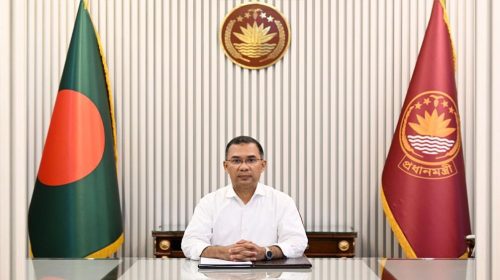
According to the report, the current government led by Prime Minister Tarique Rahman has been seeking to create a more investment-friendly environment and attract foreign investment.
Industry analysts say removing regulatory and financing bottlenecks and ensuring predictable policies will be crucial for restoring investor confidence and enabling major industrial projects such as the BMSIL steel plant to become operational.
Source: Kaler Kantho