





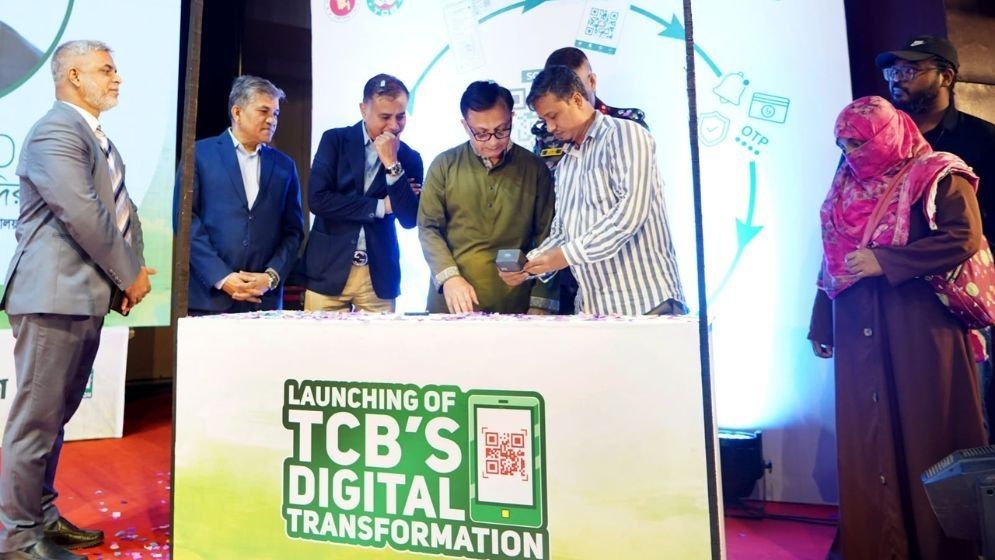

The Trading Corporation of Bangladesh (TCB) is saving around Tk80 crore annually in operating costs through digital reforms, while improving transparency and the delivery of subsidised essential commodities to low-income families, according to a presentation made at an event in Dhaka on Thursday.
The findings were presented at a special event titled ‘Trade with TCB’ at the Golf Garden of Army Golf Club by Dr Badrun Nessa Ahmed, senior research fellow at the Bangladesh Institute of Development Studies (BIDS) and professor at the BIDS Graduate School of Economics.
The state-owned marketing agency under the Ministry of Commerce aims to supply essential commodities at subsidised prices every month to one crore low-income families across the country.
According to the presentation, TCB has verified and enrolled 79.90 lakh genuine beneficiaries in its nationwide digital database and activated around 73.07 lakh smart family cards. Digital verification through electronic know-your-customer (e-KYC) checks and national identity card matching has led to the rejection of around 59 lakh fake and ineligible applications.
The presentation said the measures had helped prevent the wastage and black-market diversion of government-supplied commodities.
TCB is saving around Tk80 crore a year through a modern digital treasury system and direct delivery of products from warehouses to dealers. Of the savings, Tk60 crore comes from collecting payments directly from dealers through bank application programming interfaces (APIs), while Tk20 crore is saved through in-house warehouse management.
Interest expenditure on commercial loans is also projected to fall significantly, from Tk533 crore in the 2023-24 fiscal year to around Tk106 crore in 2026-27.
Under its Tk8,000 crore procurement plan for the 2026-27 fiscal year, TCB aims to reduce procurement costs and increase total sales revenue by 83 per cent. The plan is expected to help cut the per-capita subsidy for each beneficiary by 17 per cent.
The agency has also expanded its product range to include profitable essential goods such as soap, detergent, salt, tea, flour and spices. Selling these items on the open market is expected to create opportunities to offset subsidy costs.
To improve customer services, TCB has launched the ‘Upokari’ smart app, through which beneficiaries can receive notifications about nearby sales centres and product availability from home. They can also collect products online or pay in cash by scanning encrypted QR codes. The app is designed to ensure uninterrupted services even if a family card is lost.
TCB has also introduced a hotline at 09638 111 888 and a WhatsApp service operating round the clock to provide assistance and resolve complaints.
The presentation highlighted greater transparency in procurement and tendering, with all tenders conducted through the electronic government procurement (e-GP) system, public opening of tenders, and faster digital processing of security deposits and payments to suppliers.
Looking ahead, TCB plans to use smart cards to deliver other social safety net benefits, introduce artificial intelligence (AI) to monitor market prices around the clock and expand its own warehouse capacity.
The long-term goal is to make the agency fully self-reliant and eliminate its dependence on subsidies.