






School textbooks will feature new content on Ziaur Rahman, Khaleda Zia, the 7 November, 1975 events, the 1990 mass uprising and the July 2024 uprising from the 2027 academic year.
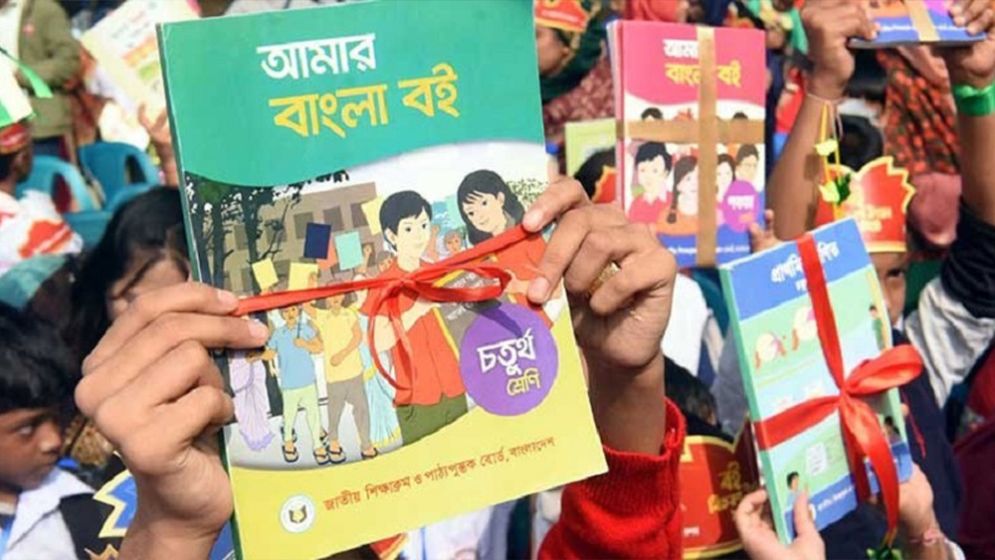
The National Curriculum and Textbook Board (NCTB) has planned 14 additions and revisions to Bangla Literature, Bangladesh and Global Studies, and History of Bangladesh and World Civilisation books for Classes 3 to 10.
The initiative follows the government’s electoral pledge to present what it describes as an accurate history of the Liberation War.
NCTB Chairman Prof Mohammad Fakhrul Mawla said the 2027 changes would mainly involve additions and revisions to existing books, while major changes would come with the 2028 curriculum.
A key addition will cover what the NCTB document describes as Ziaur Rahman’s “We Revolt” rebellion and declaration of independence. It will be introduced briefly in Classes 3-7 and covered in greater detail in Classes 8-10.
Biographies of Ziaur Rahman and Khaleda Zia will be added to the Class 5 Bangladesh and Global Studies textbook, while Zia’s Memories of the War of Independence will be included in Bangla textbooks for Classes 9-10.
Other additions include content on the seven Bir Sreshthos, the Liberation War Brigade Forces and the organisational phase of the 1971 war, including the Teliapara Meeting.
Books from Class 6 upwards will include accounts of the “Sipahi-Janata Revolution” of 7 November, 1975, while Khaleda Zia’s contribution to the 1990 mass uprising will feature in Classes 8-10.
Content on the July 2024 uprising, including “The Story of Martyr Anas” and the July Mass Uprising Memorial Museum, will also be introduced.
Education Minister ANM Ehsanul Hoque Milon told parliament last month that the curriculum would include age-appropriate accounts of the July uprising, including its causes, deaths, sacrifices, women’s role and historical significance.
He also said Class 9-10 history books would cover enforced disappearances, killings, money laundering, the electoral system, the Pilkhana tragedy, killings of journalists and media interference during the previous Awami League government.
The revisions have renewed concerns over political influence on textbook history, which has repeatedly changed with successive governments.
Prof Siddiqur Rahman, a curriculum specialist and former Dhaka University professor, said historical accounts should not change with governments.
“Today one party will come to power, tomorrow another, and they will arrange history in their own way. That cannot be history,” he said.
He called for historical content to be based on documented evidence, with individual contributions neither exaggerated nor diminished.
The NCTB plans to print around 31 crore textbooks for nearly four crore students for 2027. While primary-level production is progressing, only around 13% of secondary books had been delivered, including 18% for Class 6, 17% for Class 7 and 2% for Class 8. None of the Class 9-10 books had been delivered.
The board aims to deliver secondary books to all upazilas by 30 November, while primary books are expected to reach schools by 15-20 October.