










Business activity in Bangladesh’s manufacturing sector slowed in September, driven by declines in new orders, output, stocks of raw materials and finished goods, and imports.
The services sector failed to break out of contraction, while construction slipped back into contraction. Only agriculture remained in expansion.
Weakness in manufacturing, construction and services dragged the overall economy down further last month, according to the latest Purchasing Managers’ Index (PMI).
The PMI, which tracks the pace of economic activity every month, was released on Wednesday (7 October) through a press release. The index has shown the economy swinging up and down over the past two years.
The PMI fell to 48.6 in September from 49.9 in August.
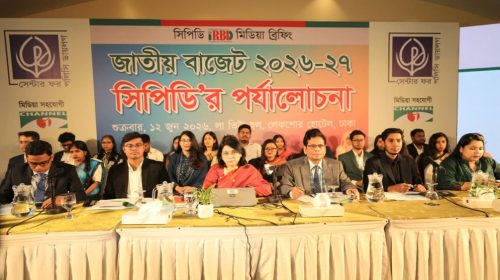
Metropolitan Chamber of Commerce and Industry (MCCI), Dhaka and Policy Exchange Bangladesh (PEB) jointly released the PMI report.
It is based on the views of top executives at 400 private-sector firms across the main sectors: agriculture, trade, construction, manufacturing and services.
Data are collected on raw material purchases, new orders, employment and other indicators.
The PMI is measured on a scale of 0 to 100. A reading above 50 indicates expansion, while a reading below 50 indicates contraction.
Businesses surveyed last month cited five main concerns: repeated hikes in fuel prices, rising raw material and operating costs, weak consumer purchasing power, shortages of electricity and gas, and limited access to bank credit.
The entrepreneurs said broader economic uncertainty has made it difficult to plan ahead. They warned that conditions could worsen if pressure from fuel and other costs persists.
According to the press release, business confidence remained cautious among respondents.
They said future prospects depend largely on stronger domestic demand, reliable energy supplies, easier access to finance and reduced cost pressures. Some firms, however, expressed hope of improved business activity in the coming months, citing confirmed orders, reliable buyers and the likelihood of higher demand during the winter and the business season.
The manufacturing PMI fell by 2.6 points to 44.8, making the biggest contribution to the overall decline. It stood at 47.4 in August. The construction PMI dropped by 3.8 points to 48.5.
The services sector has now been in contraction for two consecutive months, with its PMI slipping to 49. New business and business activity in the sector returned to contraction, although the pace of job losses eased somewhat.
Agriculture, by contrast, has remained in expansion for 13 straight months. However, its PMI declined by 1.3 points from the previous month to 55.2, as growth in new business, activity and employment slowed.
In a statement, Policy Exchange Bangladesh Chairman M Masrur Reaz said the September PMI showed the economy remained under pressure because of weakness in manufacturing, construction and services.
He said continued expansion in agriculture had helped maintain some stability.
The economist added that modestly positive expectations across all sectors provide a promising base for economic recovery.
To revive economic activity, he said, it is important to strengthen domestic and export demand, ensure reliable energy supplies, ease financing constraints and contain rising costs.