






The government has proposed a series of tax incentives and policy support measures for the electric vehicle (EV) sector to promote green transportation and attract both domestic and foreign investment in Bangladesh’s automobile industry.
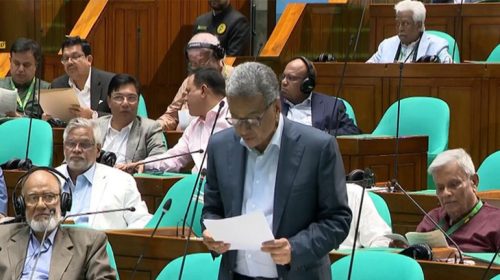
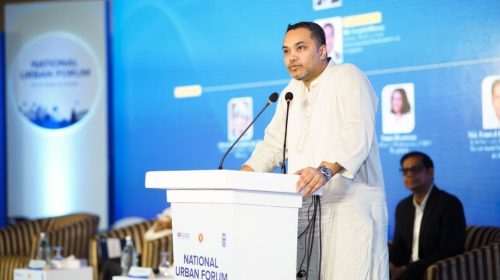
In his budget speech, Finance Minister Amir Khosru Mahmud Chowdhury announced that a new notification would be issued to encourage local production of electric vehicles and their components.
Under the proposal, manufacturers involved in body fabrication, welding, painting and assembly of four-wheelers and three-wheelers with high local value addition will enjoy exemptions from all duties and taxes except a 3% import duty on inputs. For manufacturers with lower local value addition, exemptions will apply except for a 15% import duty.
The budget also proposes full exemption from taxes and duties, except a 5% VAT, on imported inputs used in the local manufacture of electric buses and trucks until June 2031.
Duty benefits will be extended to the e-bike manufacturing industry, including local assemblers and parts manufacturers.
In addition, tax exemptions have been proposed for the production of lithium-ion and sodium-ion batteries, including battery packs, until 2030.
The government also plans to extend duty exemptions on electric buses used by educational institutions for student transportation until 2030.
To encourage private EV adoption, the total tax burden on electric vehicles valued at up to US$25,000 will be reduced to 64%, while EVs priced up to $50,000 will be subject to an 80% tax burden.
In the hybrid vehicle segment, regulatory duties on plug-in hybrid electric vehicles (PHEVs) with engine capacities of up to 1,800cc will be completely withdrawn. Taxes on PHEVs with engine capacities of up to 2,000cc will also be reduced, depending on the category.
To support the development of charging infrastructure, import duties on EV chargers and charging stations will be cut from 39.75% to zero.
The government will also withdraw the 5% source tax on imports of EV buses, trucks and charging equipment.
At the same time, the budget seeks to discourage the use of fossil fuel-powered vehicles by increasing the tax burden on petrol and diesel cars with engine capacities ranging from 1,200cc to 1,600cc from 132.36% to 155.88%.
As part of broader industrial policy support, VAT exemptions on the local production of hybrid vehicles, plug-in hybrids, three-wheelers, four-wheelers, electric buses and electric trucks will remain in force until 2030.