






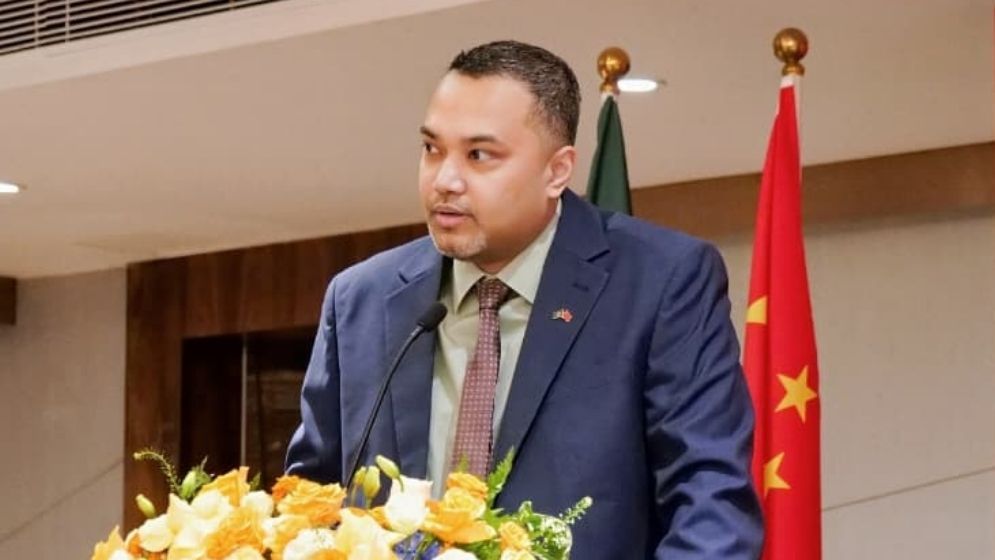

Prime Minister’s Adviser and Prime Minister’s Office Spokesperson Mahdi Amin said on Wednesday that education should be one of the key drivers of people-to-people connectivity between Bangladesh and China.
“We want education to be one of the key drivers of people-to-people connectivity between Bangladesh and China,” Mahdi said.
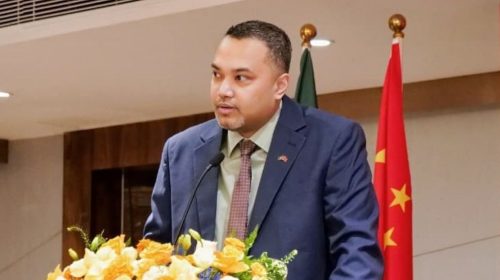
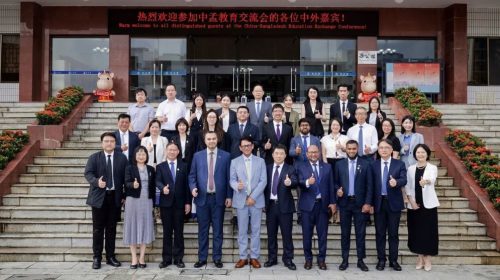
Mahdi made the remarks while addressing a high-level discussion titled “China-Bangladesh Education Cooperation” in Beijing during his visit to China at the invitation of the Chinese government, said a press release.
Addressing representatives of leading Chinese universities and educational institutions and members of the Bangladesh delegation, Mahdi said the friendship between Bangladesh and China had deepened over the years.
He said the current Bangladesh government also attaches priority to relations with China, pointing out that Prime Minister Tarique Rahman visited China after Malaysia during his first foreign trip after taking office.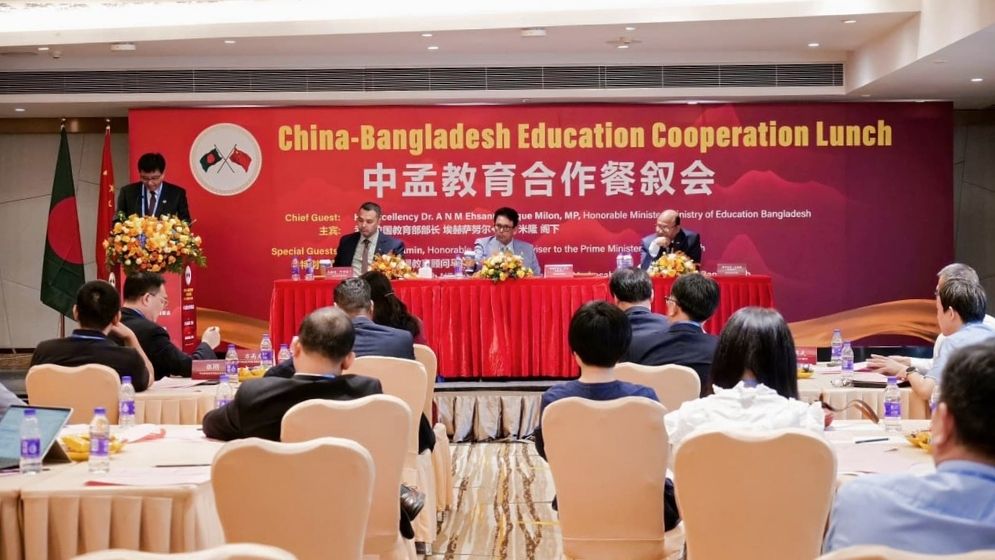
He said education reform was at the centre of the government’s election manifesto and stressed the need to make education accessible to all, regardless of political affiliation or ideology.
“Our biggest economic strength is our large working-age population, or demographic dividend,” he said.
The government is committed to making education more employment-oriented and practical, Mahdi said, adding that it plans to prioritise and make technical and vocational education and training (TVET) compulsory for all.
He said third-language education was also being made compulsory to help young people compete globally, with Prime Minister Tarique Rahman giving priority to Mandarin Chinese.
The government is also taking initiatives to strengthen industry-academia collaboration to establish a direct link between academic curricula and the job market, while plans are underway to introduce modern employment exchanges to facilitate students’ access to jobs, he said.
Mahdi said many Chinese universities were now leading global rankings and scientific research and Bangladesh wanted to bring their global best practices and research culture to the country.
“China’s polytechnic institutes and technical and vocational education experts can play a highly productive role in this regard,” he said.
He called for a significant increase in scholarships for talented Bangladeshi students to pursue higher education and research at renowned Chinese universities.
Rather than focusing only on new infrastructure, Bangladesh also wants to undertake joint research projects to establish modern laboratories at its universities and ensure access to international academic journals, he said.
He stressed the need to increase regular exchanges of teachers, researchers and students between the two countries.
The government also wants to work more closely with China for the welfare of Bangladeshi students currently studying there, Mahdi said.
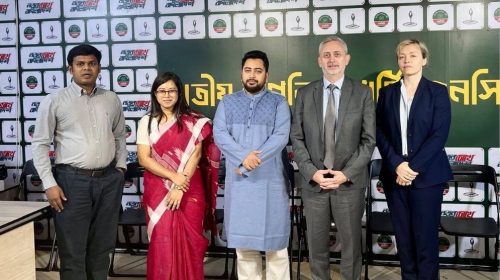
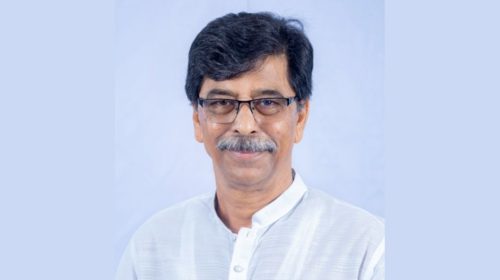
Education Minister ANM Ehsanul Hoque Milon, Technical and Madrasah Education Division Secretary Mohammad Daud Mia, senior representatives of leading Chinese universities and educational institutions, and officials of the Chinese Embassy in Bangladesh attended the event.
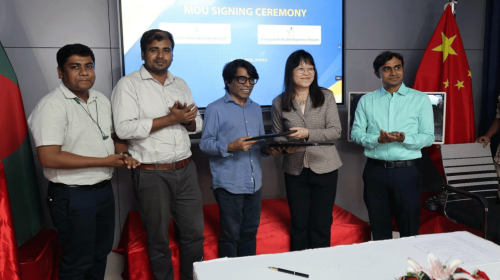
The meeting also formally launched the China-Bangladesh Industrial and Education Integration International Service Center, aimed at promoting closer cooperation between the two countries in education and industry.