





March 7 remains one of the most significant and inspirational dates in the history of the Bangladeshi nation. It symbolizes the spirit of resistance, unity, and the unwavering aspiration for independence that ultimately led to the birth of a sovereign state.
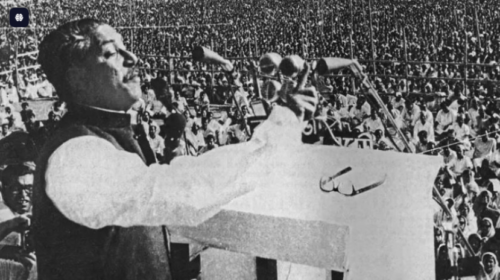
On this day in 1971, a massive sea of people gathered at the then Racecourse Maidan—now known as Suhrawardy Udyan in Dhaka. Standing before millions of eager listeners, the founding father of Bangladesh, Sheikh Mujibur Rahman, delivered what would become one of the most powerful political speeches in history. His historic address effectively provided the roadmap for the nation’s struggle for liberation.
In his thunderous voice, he declared words that would echo across generations: “This time the struggle is for our freedom, this time the struggle is for independence.” Through this powerful message, he inspired an oppressed nation to rise with courage and determination against decades of political discrimination, repression, and injustice.
The speech unified the people of Bengal and ignited a nationwide movement. Following his call, preparations for resistance spread from city to village, from household to household. Within weeks, the struggle evolved into a full-scale liberation war. After nine months of intense fighting and immense sacrifice—including the loss of three million lives—the people achieved victory and established the independent and sovereign state of Bangladesh.
The historical importance of the March 7 speech extends far beyond the country’s borders. In 2017, UNESCO recognized the speech as part of the “Memory of the World Register,” acknowledging it as a documentary heritage of global significance. Historians widely regard it as one of the most influential political speeches ever delivered, capable of mobilizing an entire nation toward freedom.
The speech also holds constitutional significance in Bangladesh. Through the Fifteenth Amendment, it was incorporated into the Fifth Schedule under Article 150(2) of the Constitution. Internationally, the speech gained further recognition when it was included in the 2013 publication We Shall Fight on the Beaches: The Speeches That Inspired History, a collection of some of the greatest wartime speeches delivered over the past two and a half millennia.
In terms of national observance, March 7 was officially declared a “National Day” in 2020 and began to be observed with state recognition from 2021. However, following political changes after August 5, 2024, the advisory council of the interim government canceled the day’s state status and public holiday on October 16 of the same year.
Despite political changes and differing perspectives, the significance of March 7 remains deeply embedded in the collective memory of the Bangladeshi people. It is more than just a historical date—it is a symbol of national awakening, courage, and the unbreakable determination of a people who fought for their freedom.
For Bangladeshis at home and abroad, the spirit of March 7 continues to inspire generations, reminding the nation of the power of unity, resilience, and the enduring pursuit of liberty.


