









Bangladesh is a Muslim-majority country. Its historical, cultural and religious ties with the Muslim world are also deep.
Therefore, it is natural to discuss Bangladesh’s involvement in initiatives concerning cooperation or security among Muslim countries. However, the question of joining any military alliance cannot be judged solely through the lens of religious solidarity or emotion. It is closely linked to national security, the independence of foreign policy, and Bangladesh’s sovereign right to make decisions based on its own national interests.
The recent debate over Bangladesh joining the so-called “Mecca Pact,” or a proposed military alliance among Muslim countries, therefore demands serious scrutiny.
The fundamental basis of a state’s foreign policy should be its own security and national interests. Expressing solidarity with a particular religious or civilisational identity is one thing; becoming part of a binding military alliance is an entirely different matter.
The tendency on the part of the Foreign Ministry to portray the Mecca Pact as a mechanism for the self-defense of the global Muslim community should also be approached with caution. The primary responsibility of a state is not to defend a particular civilisation or religious group, but to ensure the security of its own territory, people and national interests.
In international relations, a country cannot automatically treat another country’s enemy or conflict as its own.
Strategic Autonomy Is Bangladesh’s Strength
For a middle-power state like Bangladesh, strategic autonomy is extremely important. The ability to maintain balanced relations with various powers in global politics is one of the defining features of Bangladesh’s foreign policy. Bangladesh has the opportunity to advance relations with countries such as India, China, the United States and Iran based on its own interests.
However, joining a formal military alliance could limit that strategic flexibility.
Membership in an alliance does not mean merely participating in joint exercises or defense cooperation. It can also create political and diplomatic pressure to take positions in future conflicts. As a result, Bangladesh could find itself in a geopolitical position where making independent decisions based on its own interests becomes increasingly difficult.
Bangladesh is not a superpower capable of leading a military bloc and reshaping the course of regional politics. Nor is it a country that needs to seek shelter under the protection of a major power for its security. Rather, maintaining relations with different countries while advancing its own interests is likely to be a more effective strategy for Bangladesh.
Another Country’s Enemy Is Not Necessarily Our Enemy
One of the biggest risks of a military alliance is the possibility that another country’s conflict could become our own.
Saudi Arabia, Türkiye and Pakistan each have their own regional and global interests. Bangladesh may maintain friendly relations with these countries. But there is no reason to assume that all of their strategic positions are identical to Bangladesh’s national interests.
In particular, Saudi Arabia’s long-standing regional rivalry with Iran needs to be taken into consideration. Bangladesh has no border dispute with Iran. Nor does it have a history of hostility with the country. Bangladesh has no direct interest in the power struggle in the Middle East. But if Bangladesh becomes part of a military alliance, it could face pressure to take sides at some point in such a conflict.
Similarly, the long-standing rivalry between Pakistan and India is particularly important for Bangladesh.
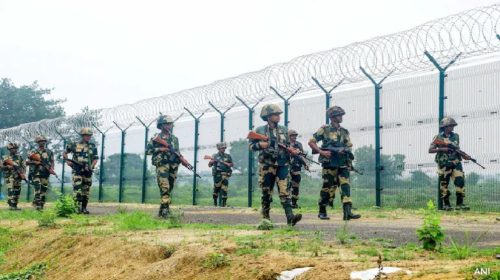
Although Bangladesh’s relations with India have experienced various tensions, the realities of geography cannot be ignored. Bangladesh shares its longest land border with India. Many critical issues—including the economy, connectivity, border management, rivers and regional stability—are directly connected to India.
If a conflict breaks out between Pakistan and India, there is no need to automatically incorporate it into Bangladesh’s security calculations. Bangladesh’s history makes the issue even more sensitive, as it achieved independence from Pakistan through the Liberation War in 1971. If membership in a military alliance raises questions about Bangladesh’s position in an India-Pakistan dispute, it could create an extremely complicated diplomatic situation for Dhaka.
Geography Cannot Be Ignored
Geography is a permanent reality in foreign policy. Governments may change and international relations may evolve, but neighbors do not change. Therefore, Bangladesh must take its long-term interests into account in its relations with India.
If Bangladesh joins a military alliance whose important members have hostile relations with India, new questions could arise in New Delhi about the alliance’s position. The possibility that this could affect border security, trade, connectivity and regional cooperation cannot be ruled out.
Bangladesh’s foreign policy should not be aimed at increasing disputes with its neighbors. Rather, it should seek to maintain a balance of national interests through cooperation, competition and differences of opinion as circumstances require.
Economic Risks of a Middle East Crisis
The stability of the Middle East is also deeply connected to Bangladesh’s economic security. The country’s energy imports, international shipping routes and the large number of Bangladeshi expatriates working in the Middle East are particularly important in this regard.
If conflict erupts along critical maritime routes such as the Strait of Hormuz and Bab el-Mandeb, international trade and energy supplies could come under significant pressure. In such a situation, if Bangladesh takes the side of one party as a member of a military alliance, its economic risks could increase further.
Bangladeshis working in various Middle Eastern countries make an important contribution to the country’s economy. Their employment and security cannot be overlooked in foreign-policy decisions.
If Bangladesh becomes directly or indirectly involved in a regional conflict in the Middle East, it could negatively affect overseas employment markets and remittance flows. Maintaining good relations with friendly countries is important, but it is equally important for Bangladesh to keep itself away from their regional rivalries when that serves its national interest.
The Constitution’s Principle of Peace
Article 25 of the Constitution is one of the foundations of Bangladesh’s foreign policy. It emphasises the promotion of international peace, security and solidarity; respect for the sovereignty and equality of other states; non-interference in their internal affairs; and the peaceful settlement of international disputes.
In light of these principles, Bangladesh’s possible membership in any military alliance should be considered carefully.
Becoming a member of a defense alliance does not simply mean strengthening defense capabilities. It also means becoming involved, to some degree, in the political and military decisions of that alliance.
Bangladesh has long played an important role in United Nations peacekeeping operations. Through this role, the country has established itself internationally as a peace-loving and responsible state. Therefore, Bangladesh needs to be cautious about joining any military alliance that could put its neutral and peace-oriented image into question.
Bilateral Cooperation, Not an Alliance
Joining a military alliance is not essential for strengthening national defense capabilities. Bangladesh can instead expand bilateral defense cooperation with various countries.
It can acquire modern defense technologies and equipment from Türkiye, conduct military training and joint exercises with Saudi Arabia, and pursue necessary information-sharing and intelligence cooperation with Pakistan within bilateral frameworks.
This would strengthen Bangladesh’s defense capabilities without binding the country to collective military commitments.
In international relations, cooperation and a military alliance are not the same thing. If Bangladesh can obtain the necessary cooperation without joining an alliance, there will inevitably be questions about the necessity of sacrificing strategic independence to become part of one.
National Security Must Come First
Bangladesh’s security is not limited to military security. Border security, security in the Bay of Bengal, cybersecurity, energy security, food security, climate-change risks, employment and economic stability are all components of national security.
Bangladesh, in particular, faces significant future risks from climate change, with large parts of the country potentially becoming increasingly vulnerable. In a country with limited resources, the greatest investment priorities should be healthcare, education, infrastructure, employment and climate resilience.
Therefore, before becoming involved in a distant conflict or spending large amounts of money to fulfill the obligations of a military alliance, Bangladesh must establish its national priorities. Human security should be at the center of the country’s security policy.
Think Before Making a Decision
The real test of national interest in international politics comes when a close friend makes a proposal that is not entirely compatible with one’s own national interests.
At such times, a sovereign state must have the ability to say “no” when necessary, without denying friendship.
Bangladesh’s Muslim identity is an important part of its history and society. The country can express solidarity with the Muslim world during times of crisis. It can also continue to support the cause of Palestinian independence.
But religious solidarity does not mean aligning oneself with every decision of a military alliance.
Therefore, before making a final decision on the Mecca Pact, Bangladesh must prioritize national interests over emotion. The central question should be whether the alliance will enhance Bangladesh’s security or instead create new diplomatic and military risks.
Bangladesh should be at the centre of Bangladesh’s foreign policy.
There will be friendship, there will be cooperation, and Bangladesh will maintain its relations with the Muslim world. But above all, the country’s sovereignty, the security of its people and its national interests must come first.
That will be the true test of a “Bangladesh First” policy.