
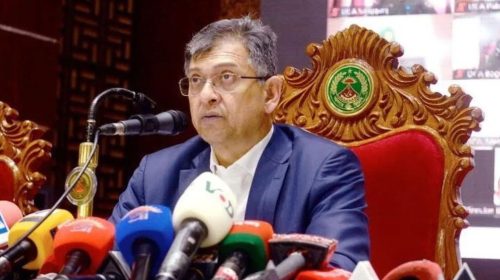

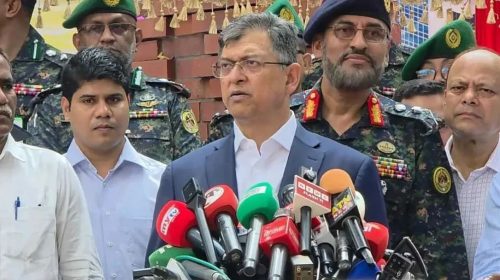




Prime Minister Tarique Rahman on Monday categorically said that the Teesta barrage master plan will be implemented at any cost to ensure the country’s water security, support agriculture and improve the livelihoods of people in the northern region describing it as a national priority.
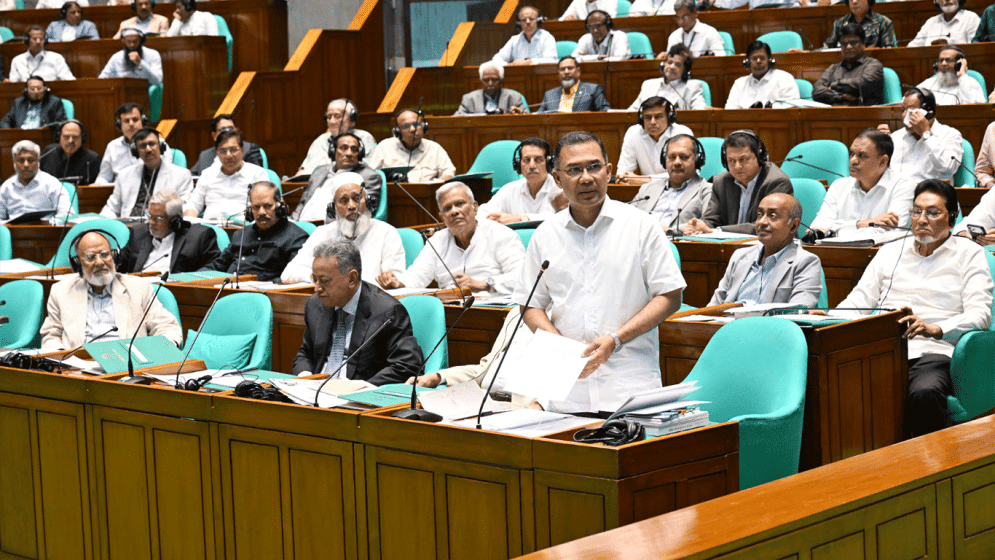
“The government is committed to resolving the country’s long-standing water management challenges through major investments in rivers, canals, and irrigation infrastructure,” he said while taking part in the general discussion on the proposed budget for fiscal year of 2026–27 in the House.
Tarique said water remains one of the biggest concerns for the people of the Rajshahi and Rangpur regions as MPs regularly raise various issues relating to the Padma and Teesta rivers. “We are working relentlessly to address these problems,” he categorically said.
Highlighting year-round water availability for agriculture as one of the government’s key objectives, the prime minister said the government has already initiated plans to construct the Padma Barrage as excess water during the monsoon would be stored and utilised during the dry season for agriculture and other sectors.
“The Padma Barrage will enable us to store surplus monsoon water so that it can be supplied to farmers and other essential sectors throughout the dry season and at other times of the year,” he said.
The prime minister noted that Bangladesh has long suffered from the lack of integrated river management, water conservation, flood control, and inter-river connectivity. As a result, many rivers have lost their navigability, while irrigation and water shortages have emerged in various parts of the country, he added.
“I have visited areas where, despite being surrounded by water during the monsoon, farmers just a short distance away cannot irrigate their fields because of water scarcity. To address this problem, nationwide canal excavation and re-excavation programmes have already begun,” he said.
The prime minister said the government plans to excavate and re-excavate 20,000 kilometres of canals over the next five years to improve water flow, irrigation systems, and flood management.
“Work is already underway under the canal excavation programme. In just the past three months, approximately 900 kilometres of canals have been excavated or re-excavated,” he told the House.
Speaking about government support for farmers, the prime minister said one of the administration’s earliest decisions after assuming office was to waive agricultural loans of up to Tk10,000, along with the accrued interest. Approximately 1.3 million farmers have benefited from the measure.
He further said the government has introduced a special farmer card to provide direct assistance to farmers.
“During the 2026–27 fiscal, around 4.3 million farmers will receive financial support and at least 10 additional services through this card. We promised to stand by our farmers, and we are delivering on that promise,” he said.
The prime minister also outlined various government initiatives aimed at creating employment opportunities for young people, enhancing skills, and expanding overseas employment.
“The government is working to send more skilled workers abroad and expand services for Bangladeshi expatriates,” he said.
As part of these efforts, he announced plans to introduce a “Probashi (Expatriate) Card” to make government services more accessible for Bangladeshis living abroad and reduce the difficulties they face.
Emphasising on energy security, the prime minister said, “An uninterrupted energy supply is crucial not only for economic growth but also for national security.”
He alleged that the country’s energy sector had suffered due to years of corruption, weak planning, and neglect.
“Domestic gas exploration was neglected, creating excessive dependence on foreign companies,” he said.
The prime minister added that the current government is focusing on diversifying energy sources, expanding domestic gas exploration, promoting renewable energy, and improving energy efficiency to reduce reliance on imports.
Referring to the recent crisis in the Middle East, he said, “This situation has once again demonstrated how vulnerable an import-dependent energy system can be.”
“The government’s broader objective is to build a strong and resilient economy that will support Bangladesh’s long-term development goals,” he added.
On education, the prime minister said an educated population with strong moral values is the nation’s greatest asset.
“However, the education system was deliberately weakened during the previous administration. Comprehensive reforms in the education sector are essential to prepare future generations to meet the challenges of the times,” he said.
Earlier, the parliamentary session resumed at 10:30am with Speaker Hafiz Uddin Ahmad in the chair.
During the concluding session of the budget debate, Opposition Leader Shafiqur Rahman spoke first, followed by Prime Minister and Leader of the House Tarique Rahman.