








Analysts have stressed the need to integrate all streams of education in Bangladesh—particularly madrasa education—into the country’s national skills development and employment framework to enhance its economic competitiveness. They argue that merely having a large youth population is not enough to reap the benefits of the demographic dividend; young people must be equipped with the skills demanded by a modern economy.
Recently, Education Minister ANM Ehsanul Hoque Milon told parliament that around 70 lakh students are currently enrolled in nearly 25,000 Qawmi madrasas across the country. In addition, around 14 lakh students study in over 9,000 Alia madrasas, while thousands of Ebtedayi institutions educate a significant number of children. This means a substantial portion of Bangladesh’s future workforce is being shaped through the madrasa education system.
Analysts therefore ask whether these students are being adequately prepared for a future in which Bangladesh aims to transform itself into an industrial, technology-driven, and service-oriented economy.
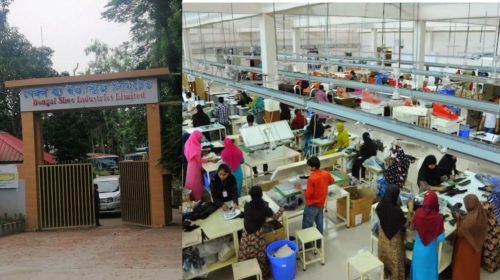
The government has set a goal of positioning Bangladesh as a regional hub for manufacturing, technology, and services by reducing its dependence on the ready-made garment sector and attracting investments in electronics, pharmaceuticals, information technology, logistics, agro-processing, and other high-value industries.
Economists, however, point out that ambitious plans alone are not enough to attract foreign investments. Investors first want to know whether the country has an adequate supply of skilled engineers, technicians, programmers, electricians, machine operators, quality control professionals, and digitally competent workers. They also assess soft skills such as communication, teamwork, problem-solving ability, and adaptability to new technologies before making investment decisions.
In this context, the education minister acknowledged that there is still no comprehensive national policy for developing market-oriented skills in Qawmi madrasas. Nevertheless, the government’s initiative to introduce English, mathematics, science, and information technology into madrasa education while preserving the religious curriculum has been viewed as a positive first step.
Analysts note that Bangladesh has a long and distinguished tradition of Islamic education and scholarship. For more than two centuries, Alia madrasas have produced numerous Islamic scholars and researchers. There is no question about the importance of religious education. At the same time, however, many students in Qawmi madrasas have limited access to higher mathematics, science, computer education, business studies, technical training, and vocational skills. As a result, despite having talent and motivation, their employment opportunities often remain restricted.
The observations of Max Tuñón, country director of the International Labour Organization (ILO) in Bangladesh, reinforce this concern. According to him, Bangladesh’s principal challenge is not simply training more people but aligning the education system with labour market demands. Businesses consistently report shortages in communication skills, teamwork, digital literacy, problem-solving ability, and the capacity to learn new skills quickly in the workplace.
Analysts say these competencies are no longer optional; they have become fundamental requirements of the modern workplace. If millions of young people remain outside the national skills development framework, building a skilled workforce capable of driving economic growth will become increasingly difficult.
Several Muslim-majority countries have already integrated religious and modern education. In Türkiye, state-run Imam Hatip schools provide Islamic education alongside science, mathematics, languages and general education. Saudi Arabia has likewise incorporated science, technology, mathematics and modern languages into its national curriculum while maintaining religious studies.
Analysts emphasise that Bangladesh does not need to replicate any other country’s model. However, it should recognise that religious and modern education are complementary rather than competing systems.
Meanwhile, recent educational partnerships between several Bangladeshi religious and higher education institutions and organisations in Pakistan have also attracted attention. Experts say international academic cooperation is both common and beneficial, but such partnerships should be conducted with transparency, accountability, and appropriate government oversight, as they can have long-term implications for curricula, institutional culture, and future generations.
They also note that Pakistan itself has long faced challenges in reforming and modernising religious education. Therefore, Bangladesh should ensure that any international educational cooperation prioritises national interests, educational quality, and the country’s long-term development objectives.
Experts believe madrasa education should evolve into a system where every student—whether from a madrasa, school or any other educational institution—acquires the knowledge and skills needed to compete successfully in today’s labour market.
According to analysts, Bangladesh cannot achieve its ambition of becoming an upper-middle-income, investment-driven economy while leaving one of its largest education sectors outside the national development strategy. The country needs an education system in which a madrasa graduate can confidently pursue careers in factories, software companies, banks, hospitals, government institutions, or engineering firms.
Ultimately, they argue, Bangladesh faces a fundamental question: can the country achieve its desired economic transformation while leaving millions of young people outside the skills revolution? For a nation aspiring to become an upper-middle-income, investment-led economy, the answer should be self-evident.