





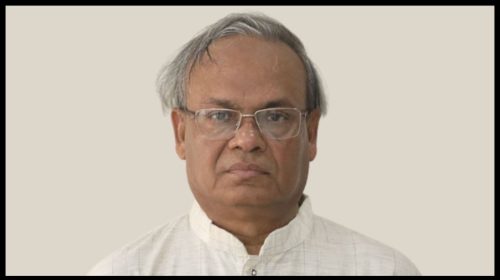



Soumya Sarkar spent close to 90 minutes in the nets on Monday, working against a bowling machine on a granite slab. The slab was split into two zones for full-length and back-of-length deliveries.
Nothing about this session seemed casual.
The machine bowled at him every 10 seconds. That’s rapid by any standards. No time to reset, no time to breathe between deliveries. It’s built to simulate sustained pace pressure.
It is akin to playing a lot of blitz chess in order to get into the groove to contest a timeless game.
Against the full-length balls, Soumya got hurried repeatedly. That means his hands and feet were arriving late — his downswing wasn’t syncing with the ball’s arrival. But he wasn’t beaten. That’s the key detail. Hurried but not beaten tells you his base was solid and his head was still.
The problem wasn’t technique breaking down, it was timing. And timing lag is fixable through repetition, unlike a structural flaw.
The back-of-length work was more encouraging. He kept going to the back-foot punch. That shot required quick weight transfer onto the back leg, a stable base to handle extra bounce, and late hands so that he’s playing the ball under his eyes, not reaching for it. It’s exactly the shot you need against bowlers who climb the bat off a hard length, which is precisely what Australian pacers do on quick, bouncy surfaces.
Senior local coach Mohammad Salahuddin was an observant watcher beside the net the whole session, correcting his bat swing and his length anticipation. This is the part that matters most. Length anticipation means where a batter picks up his cues off the bowler’s release point, not off the bounce. Against real pace, reading off the bounce is too late.
Soumya, who earned a call-up to the Test squad after more than five years, comes off on the back of a pale Test match performance in 2021, having scored nought and 13 in two innings against the West Indies.
However, it is in the past. What’s more relevant is his performance in the present. He completed the 27th National Cricket League (NCL) as the top-scorer where he totaled 633 runs at an average of 45.21. His 186 against Mymensingh Division stands as the joint-second highest individual score of this edition of the tournament.
Much like his performance in the NCL, the left-handed batter garnered a whopping 320 runs in six innings that he played in New Zealand, at an average of 53.33. He has a ton and a 50+ innings with a highest individual score of 149 at Hamilton in 2019.
Despite concerns of stacking the side with too many left-handed batters, chief selector Habibul Bashar Sumon believes that the 33-year old southpaw can be a valuable addition to the squad travelling to Australia.
“When we picked Soumya, we were thinking that we were ending up with too many left-handers together. We almost have five left-handed batsmen in the top-order now,” he said.
“If we open with Tanzid (Hasan) Tamim and Shadman (Islam), then we’d have four left-handed batsmen in a row. That’s not ideal. Definitely, with that thinking in mind, Joy (Mahmudul Hasan) is one of the right-handed openers who fits this combination,” Bashar further expressed, hinting towards playing Soumya at a lower-order position rather than at the top.
Whether the essence of this session holds up against Mitchell Starc or Josh Hazlewood or captain Pat Cummins bowling with a crowd and a scoreboard and fielders crowding the bat is a different question — no net session replicates that fully. But as preparation for what’s coming in Australia, this was about as targeted as it gets.
And might be an indication he starts for the first Test in Darwin?