









Bangladesh could nearly double rubber production per tree by introducing five high-yielding clones brought from Sri Lanka, opening up new prospects for boosting productivity in the country’s rubber sector.
The initiative has been taken by the Bangladesh Rubber Board in collaboration with the Rubber Research Institute of Sri Lanka (RRISL) under a memorandum of understanding among 18 member countries of the International Rubber Research and Development Board (IRRDB).
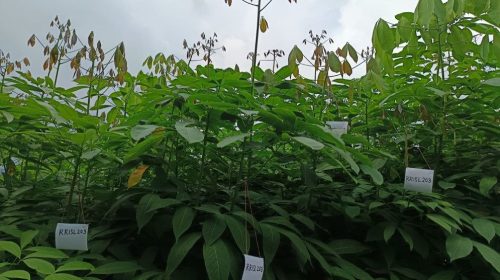
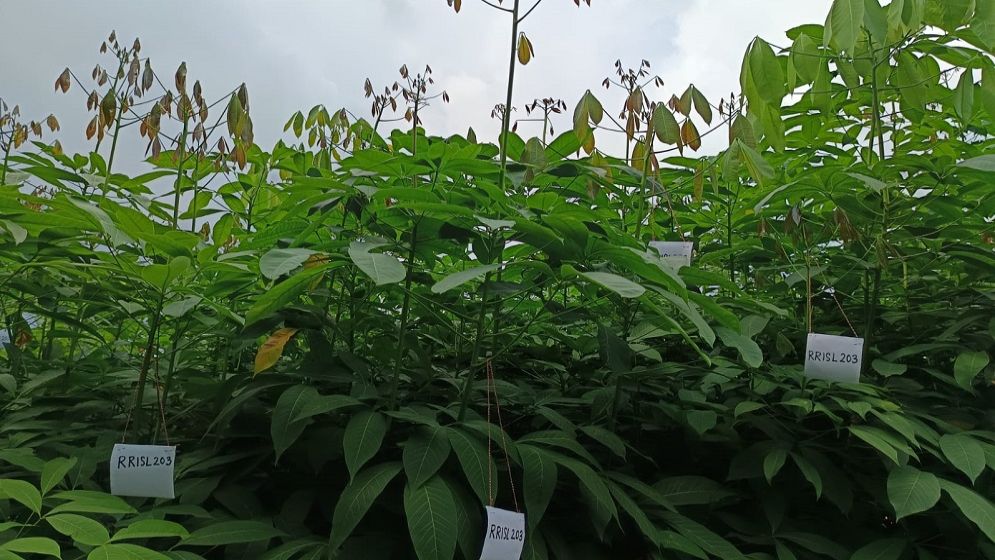
According to the Rubber Board, 33 budwoods of five high-yielding clones — RRISL-203, RRISL-208, RRISL-211, RRISL-219 and RRISL-2001 — were sent from Sri Lanka on 7 August. Rubber Board officials formally received the planting materials at Hazrat Shahjalal International Airport on 9 August.
Propagation began soon after the budwoods arrived in Bangladesh.
Under the supervision of scientists from the Bangladesh Forest Research Institute (BFRI), the first batch was successfully grafted onto 66 rootstocks. A further 221 rootstocks were grafted at the traditional Dantmara Rubber Garden in Fatikchhari, Chattogram.
A total of 287 rootstocks have thus been grafted with the imported budwoods.
Researchers specialising in dendrology and rubber science estimate that around 70–80 per cent of the grafted rootstocks could successfully develop into the improved clones.
Bangladesh’s existing rubber plantations currently produce an average of 2–3kg of rubber per tree annually, according to the BFRI and the Bangladesh Forest Industries Development Corporation (BFIDC).
The improved Sri Lankan clones, however, are expected to produce 5–6kg per tree a year, potentially doubling output from the same area of land.
If successfully established and expanded, the clones could significantly increase domestic rubber production and reduce Bangladesh’s dependence on imported raw rubber.
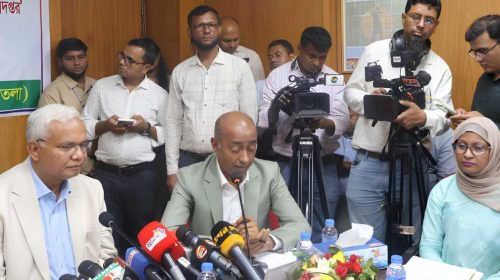
Bangladesh Rubber Board Chairman Dr Nurun Nahar said the improved clones would gradually be introduced to government and private rubber plantations following further research and successful field-level propagation.
“This will not only increase production per tree but also significantly improve the quality of domestically produced rubber,” she said.
She added that increased domestic production could reduce dependence on imported raw rubber and eventually create opportunities for Bangladesh to export rubber to international markets.


