
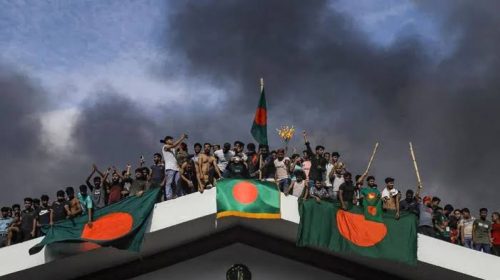




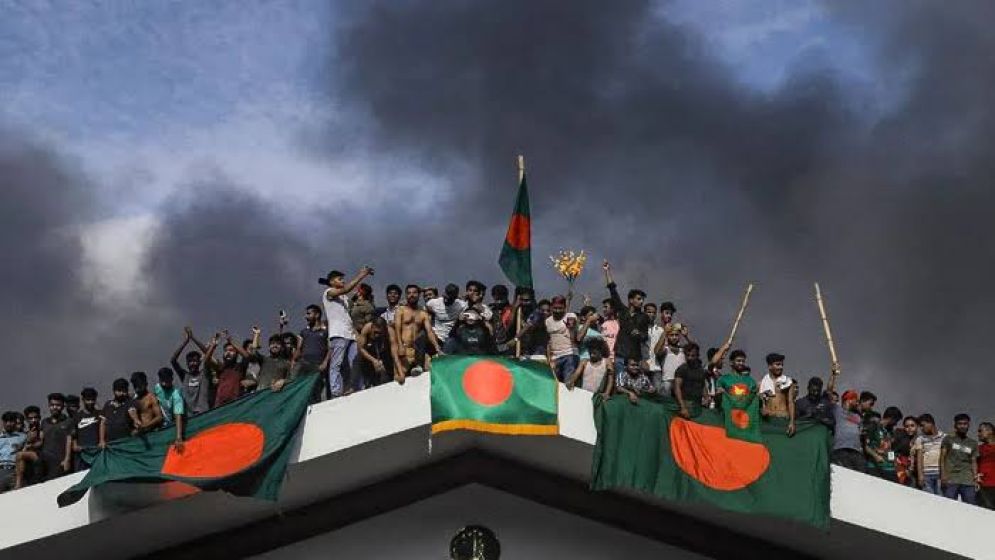

Suddenly, a heavy and tense atmosphere is being observed across the country. Do the deteriorating law and order situation, the recovery of bomb-like objects from various locations, high-alert warnings from the police, and rising political tensions hint at a new omen of danger? This question is arising in the minds of ordinary citizens. Ahead of the second anniversary of the mass uprising, a sense of unknown fear and anxiety is visible nationwide. Why such a situation? Is there a conspiracy behind this?
A maximum alert has been issued nationwide regarding potential sabotage targeting police vehicles. On Saturday (1 August), the Operations Control of the Police Headquarters issued this direction in an urgent message.
Based on intelligence reports suggesting that members of extremist organisations or miscreants might launch attacks on police vehicles—including jeeps, pickups, and buses—all field-level units have been instructed to immediately reinforce security measures.
The directive states that there is no room for laxity or negligence in ensuring the security of police vehicles. Maximum vigilance must be maintained, especially during duty hours and when parking vehicles after duty.
It further mentions that if an on-duty vehicle needs to be stopped temporarily, it must be parked in a safe location and kept under constant supervision by police personnel. Under no circumstances should a vehicle be left behind without a driver or assigned member. In other words, a strict ban has been imposed on leaving any police vehicle unattended.
Additionally, instructions have been given to enhance the security of all government vehicles parked after duty at police stations, police lines, office compounds, or other designated locations. Emphasis has been placed on regular patrolling, necessary surveillance, and exercising special caution to identify suspicious individuals or objects in these areas.
Describing the matter as “extremely important,” the Police Headquarters urged officers across all metropolitan areas, ranges, districts, and units nationwide to strictly implement these instructions.
Before this warning was issued by the police, anxiety had been spreading for several days due to bomb-like objects found in various parts of Dhaka. Although recent incidents of recovering bomb-like objects in different parts of the country created panic among the public, law enforcement agencies and the bomb disposal unit stated that those objects contained no explosives. Notable locations included the Mirpur-10 and Farmgate Metro Rail stations under the jurisdiction of Dhaka Metropolitan Police (DMP), as well as Gangni Upazila in Meherpur. The police are investigating who is doing this and why. Police officials stated that these acts are being carried out deliberately to create public panic. However, crime experts believe these incidents are “test cases.” Criminals place such objects safely to identify loopholes in the law and order system. Airports and metro rails are highly sensitive locations. How are these objects being left right under the noses of law enforcement agencies? This is undoubtedly a major security risk. Many fear that criminals might be setting the stage for a larger sabotage by leaving these items. Therefore, these bomb-like objects indicate a serious security threat.
Although instructions have been issued for police members to remain alert amid bomb scares and the recovery of suspicious objects in various parts of the capital, the Chief of the DMP’s Detective Branch (DB) and Additional Commissioner Shafiqul Islam stated that there is no specific intelligence behind this directive. However, this statement from the police has failed to bring relief to ordinary people.
In recent times, the law and order situation in the country has deteriorated significantly. One murder after another is taking place in the capital—sometimes in broad daylight, sometimes by shooting individuals dead in front of hundreds of people. Human limbs are being severed with sharp weapons. This has raised deep concern regarding the law and order situation. According to data from Bangladesh Police Headquarters, 924 murder cases were filed across the country over the last three months. Among these, a total of 326 murder incidents occurred in June alone. In the Dhaka Metropolitan area, 23 murder cases were registered in a single month.
Political tension has escalated in the country over the past month. In particular, tension arose in Habiganj over the NCP’s “July Road March.” Incidents of attacks, counter-attacks, cases, and counter-cases have occurred. Aggressive language and the tendency to hurl offensive remarks at opponents are once again rising in politics. Opposing political parties—Jamaat-e-Islami and NCP—are taking a strict stance against the BNP government. Top leaders of both parties have been criticising the Prime Minister and the government at various rallies and meetings. Notably, as NCP leaders and activists were attacked and beaten in various areas during the July march, a heated political wind has picked up. People are questioning why Jamaat-NCP is comparing BNP with the Awami League. Various questions have emerged in political circles as to why opposition parties are becoming so aggressive against a government that is barely six months old. Questions are also being raised about whether a third party is provoking the opposition. Why did the atmosphere of compromise and empathy that existed between the government and the opposition in parliament just a few days ago suddenly vanish? Is there another hand behind this? Political heat has created uncertainty across all sectors.
Political coexistence is essential for the overall peace and stability of the country. Political division not only deteriorates the law and order situation but also hinders economic development.
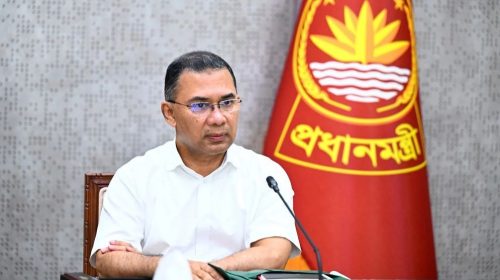
Overall, the situation in the country has not yet normalised following the 2024 mass uprising. An elected government was formed through the 12 February election. The BNP government, led by Tarique Rahman, is attempting to restore normalcy to the country. However, it is impossible for the government alone to fix everything in such a short period. For this, cooperation from all quarters is required. But the government is not receiving that cooperation. In the national interest, all political parties in the country have not yet been able to rise above their differences or display the generosity to set aside party interests temporarily. Due to political instability and intolerance, the overall situation in the country is not improving. The current deterioration of law and order is rooted in political instability. When political parties engage in conflicts and counter-attacks, criminals find opportunities, and conspirators spread their wings. Such political instability also devastates the country’s economy. The economic condition of the country was already poor. Over the past year and a half, investment declined, and the private sector came to a near standstill. The current government is trying to lift the country out of the crisis. At such a time, this kind of political instability deteriorates law and order on one hand and aggravates the economic crisis on the other, ultimately destabilising the country as a whole.
In such a situation, anti-democratic forces take advantage. The question arises: are anti-democracy forces deliberately trying to create such a situation in the country? Is that why they are pushing political parties toward division once again? If we review past history, we see that Bangladesh has repeatedly been set back by conspiracies orchestrated behind the scenes by anti-democracy forces. Whenever democracy was established in the country, conspiracies took place. Whether something similar is happening this time needs to be investigated. At the same time, the government, the opposition, and all concerned must exercise patience and display tolerant behavior. An atmosphere of unity and coexistence must be created against the politics of vengeance. Democracy must be protected at all costs. The August uprising teaches us to unite. Therefore, we must remember that unity is our main strength. Political parties will have differences, but on the question of democracy and in the national interest, there is no alternative to unity. If we are divided, democracy and the rights of the people will be endangered.