







A powerful network that allegedly matured during the nearly 16-year Awami League rule continues to dominate parts of Bangladesh’s fuel market despite two changes of government.
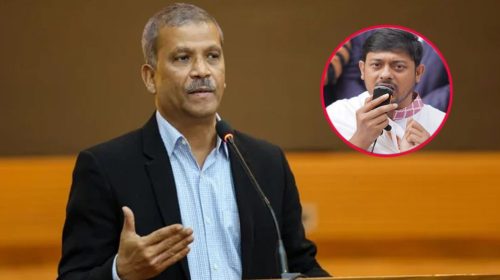
An investigation based on Bangladesh Petroleum Corporation (BPC) documents, tender and work-order records, and interviews with current and former energy-sector officials suggests that the network was built through links between former state minister for power, energy and mineral resources Nasrul Hamid Bipu and Dr Ejazur Rahman.
The investigation found allegations that the network has retained control of longstanding businesses while attempting to obstruct new government initiatives aimed at increasing competition in fuel supply. A section of beneficiaries within the BPC and the energy sector is also accused of helping preserve the old arrangement.
Under Prime Minister Tarique Rahman’s directives, the government has taken initiatives to tackle the energy crisis, expand supply sources and increase competition. Power, Energy and Mineral Resources Minister Iqbal Hassan Mahmood Tuku has also been working to restructure the sector.
However, several sources allege that a section within the BPC is resisting these efforts to maintain the existing system.
Three major allegations have emerged: control over local representation of international suppliers, use of longstanding contacts inside the BPC, and exploitation of supply crises for business advantage.
Six suppliers linked to two firms
According to BPC data, 11 international companies are currently listed as suppliers of refined petroleum products. An investigation found that at least six have local representation through two companies owned by Dr Ejazur Rahman — Seven Mark and TransBangla Commodities Ltd.
Seven Mark is associated with Unipеc Singapore Pte Ltd and Indonesia’s PT Bumi Siak Pusako (BSP)-Japin.
TransBangla Commodities is associated with Petco Trading Labuan Company Ltd (PTLCL), PTT International Trading, Vitol Asia and SinoChem International Oil.
Thus, although the six companies are separate international suppliers on paper, a significant portion of their local representation in Bangladesh is linked to two companies owned by the same individual.
BPC tender and work-order records also indicate their strong position in the market. In the 2025-26 financial year, the BPC issued work orders for the import of 5.51 million tonnes of refined fuel through G2G arrangements and open tenders.
Nearly 4.3 million tonnes, or about 78%, went to companies whose local representation or business links are associated with Dr Ejaz’s firms.
Latest tender shows little change
The latest tender for the June-August period also indicates that the situation has changed little after the government transition.
The BPC sought to import between 925,000 and 1.15 million tonnes of refined petroleum products through four packages over three months.
Unipеc Singapore received the PG-1 work order for 320,000-390,000 tonnes of diesel and 70,000-90,000 tonnes of jet fuel.
Vitol Asia secured PG-2 for 300,000-340,000 tonnes of diesel and 60,000-80,000 tonnes of jet fuel.
Trafigura received PG-3 for 150,000-200,000 tonnes of furnace oil, while Vitol again secured PG-4 for 25,000-50,000 tonnes of octane.
Unipеc and Vitol, which secured three of the four packages, have local representation linked to Dr Ejaz’s companies, according to the investigation.
The potential government expenditure on importing up to 1.15 million tonnes of fuel under the four packages is more than Tk17,000 crore.
Ejaz’s rise during Awami rule
Current and former BPC officials said Dr Ejaz’s influence developed over many years.
After the Awami League came to power following the 29 December 2008 election, his position in fuel-oil imports gradually strengthened. His close ties with then state minister Nasrul Hamid Bipu had long been discussed within the energy sector.
According to people familiar with the matter, Ejaz used political and administrative connections to establish a strong position in BPC’s international fuel-supply system and gradually secured local representation for several international companies.
Although the Awami League government fell in the student-people uprising on 5 August 2024, several energy-sector businessmen said the network’s influence remained largely unchanged.
Supply problems amid Middle East tensions
BPC documents show that during recent tensions in the Middle East, two international suppliers locally represented by Dr Ejaz said they were unable to deliver some scheduled orders on time. The issue was also raised at a BPC board meeting.
Energy-sector stakeholders say dependence on a small number of suppliers creates significant risks, particularly when the local representation of several suppliers is controlled by the same business circle.
Another issue concerns fuel premiums.
In open tenders for January-June of the 2025-26 financial year, Unipеc secured orders with premiums of $4.72 per barrel for diesel and $6.86 for jet fuel. Vitol Asia’s premiums were $4.78 and $6.88 respectively.
For the June-August tender, however, Unipеc offered $13.25 per barrel for diesel and $14.86 for jet fuel, while Vitol offered $13.18 and $14.78 respectively.
BPC-linked sources said the rise was partly justified by increased international freight, insurance and supply risks resulting from the Middle East conflict.
The question, however, remains whether the entire increase was caused by international market conditions or whether dependence on a limited number of suppliers also contributed. Sector insiders believe BPC’s purchase prices should be compared with international and regional premiums during the same period.
Government efforts face internal resistance
The government’s stated aim is to expand fuel-supply sources, increase competition and reduce excessive dependence on any particular company or group.
But several energy-sector sources allege that resistance is emerging within the BPC itself. They claim a section of officials who benefited from working with the same business circle for years wants to preserve the old system.
The investigation also found that several former BPC and oil-marketing company officials joined Dr Ejaz’s companies after retirement.
Some had held key positions in fuel procurement and sales, marketing, international supply and administration. The investigation identified at least 10 such former officials.
Multiple sources said Mustafa Qudrat-e-Elahi, former managing director of Jamuna Oil Company, has also become associated with TransBangla Commodities.
Dr Ejaz’s companies have offices in the same Karwan Bazar building that houses the BPC’s Dhaka liaison office. People familiar with the sector allege that former BPC officials’ institutional experience and longstanding contacts are being used to secure business advantages.
Questions over supplier eligibility
Questions have also been raised over Indonesia’s BSP-Japin, which has local representation through Dr Ejaz’s network.
Several BPC officials have questioned how the company met the eligibility requirements for becoming a G2G supplier.
Chattogram Port records show that several fuel consignments imported for the BPC in the company’s name arrived from ports in Malaysia and Singapore rather than Indonesia.
However, importing goods through a third-country port is not, by itself, evidence of irregularity. The key question is whether BSP-Japin met BPC’s prescribed eligibility requirements when it was listed as a supplier and what documents it submitted to establish its eligibility.
Prof M Shamsul Alam, energy adviser to the Consumers Association of Bangladesh, said: “If an individual controls the tender process and influences competition, that is a serious matter. If there is specific evidence to substantiate the allegations, legal action should be taken against the person concerned.”
Source: Kaler Kantho