











There was a time when climate change sounded like a warning from the distant future. Scientists spoke about rising temperatures, melting glaciers, rising seas and extreme weather, while governments discussed the problem at international conferences. For many ordinary people, however, climate change remained something that would affect future generations.
That distance has disappeared.
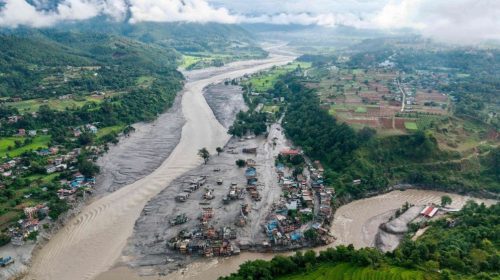
Today, the evidence is visible in everyday life. Summers are becoming more dangerous. Heatwaves are placing unprecedented pressure on human health. Heavy rainfall is producing sudden floods. Droughts are damaging agriculture and water supplies. Wildfires are becoming more destructive in many regions. Glaciers are losing mass, oceans are becoming warmer and sea levels continue to rise.
The latest figures are particularly alarming. According to the World Meteorological Organisation, 2015 through 2025 were the 11 warmest years ever recorded. The year 2025 was the second- or third-warmest year on record, depending on the dataset, at approximately 1.43°C above the 1850–1900 pre-industrial average.
The principal cause is human activity.
For more than a century, coal, oil and natural gas have powered industrial development. Fossil fuels have provided electricity, transportation, factories, aviation, modern agriculture and modern cities. They have contributed enormously to economic growth and improved living standards for billions of people.
But that progress has also transformed the atmosphere.
Burning fossil fuels releases carbon dioxide. Agriculture and livestock production release methane. Industrial and agricultural activities release nitrous oxide. Deforestation reduces the ability of ecosystems to absorb carbon.
The greenhouse effect itself is not a negative phenomenon. It is a natural process that makes Earth habitable. Without it, much of the heat received from the Sun would escape into space, leaving the planet far too cold for human civilisation.
The problem is the strengthening of the greenhouse effect caused by human activity.
Carbon dioxide, methane and other greenhouse gases allow sunlight to enter the atmosphere but slow the escape of heat back into space. As their concentrations increase, more energy remains within the climate system.
The latest WMO data show the scale of the change. In 2024, atmospheric carbon dioxide reached approximately 423.9 parts per million, while methane and nitrous oxide also reached record concentrations. These greenhouse gas levels were the highest in at least 800,000 years.
This is why the present warming cannot be explained simply by natural climate variability.
The climate has always changed. Volcanic eruptions, variations in solar activity and natural ocean-atmosphere cycles such as El Niño and La Niña can influence temperatures from year to year.
But these natural factors cannot explain the sustained warming observed since the industrial era. The dominant driver is the increase in greenhouse gases produced by human activities.
The consequences are already being felt.
Extreme heat is perhaps the most immediate threat to human health. Dangerous heat can cause dehydration, heatstroke, cardiovascular stress, kidney injury and other serious medical conditions. Older people, children and outdoor workers are particularly vulnerable.
The latest Lancet Countdown assessment estimates that approximately 546,000 people died from heat-related causes each year on average between 2012 and 2021. That was 63.2% higher than the estimated average during 1990–1999. This figure represents heat-related mortality and should not be described as the number of people directly killed by climate change. However, a warming climate increases the frequency and severity of dangerous heat exposure.
The health consequences go far beyond heat.
The World Health Organisation estimates that climate change could cause approximately 250,000 additional deaths each year between 2030 and 2050 from selected causes, including heat stress, malaria, diarrhoeal disease and childhood undernutrition. This is considered a conservative estimate because it does not capture the full range of possible health impacts.
Climate change is also an economic problem.
When temperatures become dangerously high, people cannot work safely for as many hours. Farmers, construction workers, delivery workers, street vendors and other outdoor workers face increased health risks and reduced productivity.
The damage therefore appears not only in hospitals and death statistics, but also in lost working hours, household income, agricultural production and national economies.
Agriculture is particularly vulnerable.
Crops require specific combinations of temperature, rainfall and soil moisture. Excessive heat during critical stages of crop development can reduce yields. Drought can destroy harvests. Heavy rainfall can flood agricultural land. Cyclones and storms can destroy farms within hours.
For farmers, the problem is increasingly one of uncertainty. The traditional rhythm of seasons is becoming harder to predict, while extreme events can occur with devastating consequences.
The effects eventually reach consumers.
When harvests become smaller or less predictable, food prices can rise. Poor families are generally hit hardest because they spend a larger share of their income on food. Climate change can therefore deepen poverty and inequality.
Water security is also under pressure.
A warmer atmosphere can hold more moisture, which under certain conditions can contribute to heavier rainfall. At the same time, prolonged heat and changing rainfall patterns can increase drought risks in other regions.
The result is a dangerous contradiction. Some communities face too much water at once, while others struggle with too little.
Sea-level rise presents another long-term danger.
As seawater becomes warmer, it expands. At the same time, glaciers and ice sheets lose mass. Together, these processes contribute to rising sea levels.
For millions of people living in low-lying coastal areas, sea-level rise is not an abstract scientific measurement.
It is a threat to homes, farmland, freshwater and livelihoods.
Bangladesh is a powerful example.
A country shaped by rivers, wetlands and the sea, Bangladesh is exposed to flooding, cyclones, river erosion, coastal erosion and salinity intrusion. Climate change does not create every one of these hazards, but it increases the pressure on communities already living with environmental risks.
For a farmer whose land becomes affected by saltwater, climate change is not a graph in a scientific report.
It is a damaged harvest.
It is lost income.
It is debt.
It is uncertainty about whether the family can remain on the land.
For a family forced to leave its home after repeated flooding or river erosion, climate change is not a statistic.
It is displacement.
This is why climate change must also be understood as a human rights issue.
When people lose access to safe water, food, shelter, healthcare or livelihoods, the consequences extend beyond environmental damage. Climate change can undermine human security, dignity and economic opportunity.
There is also a fundamental question of fairness.
The world has not contributed equally to the climate crisis. Wealthy industrial economies have historically produced a large share of cumulative greenhouse gas emissions, while many poorer countries have contributed far less yet remain highly exposed to climate risks.
This is the foundation of the climate justice debate.
We cannot negotiate with the laws of physics. We cannot postpone the consequences of emissions indefinitely. But we can still influence how much additional warming occurs and how well societies protect the people most at risk.
History will not judge this generation only by the problems it inherited. It will judge us by what we chose to do after the evidence became impossible to ignore.
The Earth itself will survive. The real question is what kind of world human beings will inherit.
That is why climate change is not merely an environmental story.
It is a story about health.
It is a story about economic security.
It is a story about human rights.
And above all, it is a story about responsibility.
The planet will survive. The question is whether humanity will have the wisdom and political will to keep the world safe and habitable for the generations that come after us.
The writer is a journalist and human rights activist and a member of the France-Bangladesh Journalists Association